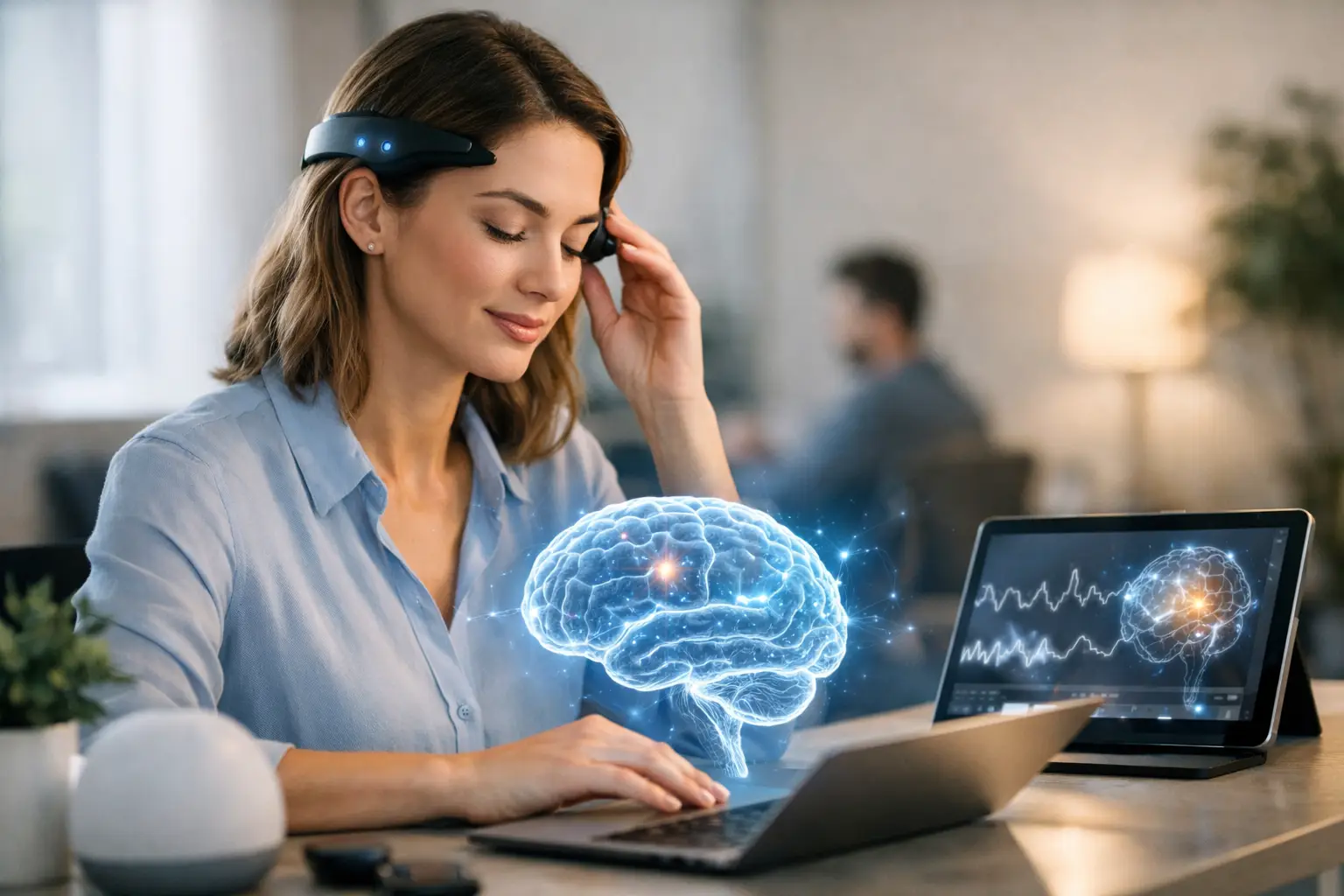
A few years ago, most people thinking about cognitive performance were piecing together a messy stack – supplements, productivity apps, meditation streaks, wearable data, and pure willpower. Now, brain health technology trends are moving in a different direction. The smartest tools are becoming less noisy, more targeted, and far more useful for people who want a sharper mind without turning self-optimization into a second job.
That shift matters if you are a professional, entrepreneur, creative, or anyone who depends on mental clarity for a living. The real question is no longer whether technology can support brain health. It is which technologies actually help focus, memory, resilience, and mental energy in a way that feels sustainable.
The biggest brain health technology trends right now
The most meaningful change is that brain health is no longer being treated as either a medical issue or a vague wellness goal. It is becoming a daily performance priority. That means tools are being built for the space between burnout prevention and peak output.
You can see this in the rise of consumer neurotechnology, personalized cognitive training, brain-friendly wearables, and noninvasive sensory tools designed to influence mental state. Some products are aimed at long-term monitoring. Others are built for immediate state change – helping you move from scattered and fatigued to calm, focused, and ready to work.
That distinction is important. A lot of people do not need more data. They need support they can actually feel during the workday.
1. Neurofeedback is becoming more accessible
Neurofeedback used to sit mostly in clinics and specialized performance labs. That is changing. More consumer-facing tools now promise to track brain activity and help users train attention, stress regulation, or recovery.
The appeal is obvious. If your brain state can be measured, maybe it can be improved with more precision. For some users, that is true. Neurofeedback can be compelling, especially for those who like structured training and visible progress.
The trade-off is friction. Hardware, calibration, interpretation, and consistency can all become barriers. For a busy person already stretched thin, a promising tool can still fail if it asks too much. Convenience is starting to matter as much as capability.
2. Audio-based brain entrainment is gaining ground
One of the more practical brain health technology trends is the move toward audio experiences designed to influence brain states through frequency-based stimulation. This category is especially interesting because it lowers the barrier to entry. No clinic visit, no complicated setup, no pills.
Not every audio product is equal, though. Some are basically relaxation tracks with modern branding. Others are designed with a more intentional neurological target, such as supporting focus, reducing mental fatigue, or helping the brain transition into a more productive rhythm.
For high-performers, this matters. The goal is not to zone out. It is to restore clear attention without adding another demanding ritual to the day. That is why simple protocols built around specific frequency patterns are getting more attention. They fit real life.
For readers looking for a low-effort way to improve focus and enter flow states, The Flow Wave Audio “Unlock Your Deep Flow” at https://flowwave-neuroflowlabs.lovable.app/ fits this shift well. It is built around a short daily listening experience rather than a complex routine, which is exactly where the category is heading.
3. Wearables are moving from fitness to cognitive recovery
Wearables used to focus mostly on steps, heart rate, and sleep. Now they are increasingly being positioned as brain health tools, especially through stress tracking, recovery scores, and nervous system signals.
This is useful, up to a point. If your device shows poor sleep, elevated stress, and low recovery, that can explain why your focus feels weak by 2 p.m. It helps connect mental performance to the body systems that support it.
But there is a limitation. A wearable can tell you that you are strained. It often cannot tell you exactly how to get your mind back online in the moment. Data is valuable, but only when paired with action. The next wave of growth in this category will likely come from tools that do more than measure. They will help regulate.
Why simpler brain health technology trends are winning
There is a pattern across the market. The tools gaining traction are not always the most advanced on paper. They are the ones people will actually use after a long day, during a demanding week, or in the middle of a high-stakes project.
That is why simplicity is becoming a competitive advantage. A 15-minute protocol that helps calm mental noise and sharpen attention may create more real-world value than a sophisticated platform that requires perfect compliance. People want results, but they also want relief.
This is especially true for adults in their late 30s, 40s, and 50s. At this stage, many people are noticing subtle changes – more brain fog, slower recall, less sustained concentration, heavier cognitive fatigue. They are not looking for another extreme routine. They are looking for something effective that fits into a full life.
4. Cognitive health is being personalized
Another major shift is personalization. Brain health tools are increasingly trying to adapt to the user rather than forcing every user into the same formula. That may mean adjusting training intensity, timing interventions based on stress patterns, or recommending different protocols for memory support versus deep work.
This trend makes sense because brain performance is highly individual. The same solution that energizes one person may overstimulate another. The same focus protocol that works at 8 a.m. may fail completely at 9 p.m.
Still, personalization has a downside when it becomes overcomplicated. If every session requires too many inputs or decisions, the user gets tired before the benefit arrives. The best personalized tools will likely be the ones that feel intelligent without feeling demanding.
5. Long-term brain health is joining short-term performance
For years, the market split into two camps. On one side, there was productivity optimization. On the other, long-term cognitive health and aging support. Now those worlds are starting to merge.
People want to focus better today, but they also want confidence that their habits are supporting memory, resilience, and cognitive vitality over time. That is a healthier mindset. It treats brain health not as damage control, but as ongoing care for the organ that runs your entire life.
This is why technologies that support calm, attention, recovery, and cognitive efficiency are getting more interest than tools built only for stimulation. More energy is not always the answer. Sometimes the brain needs better rhythm, not more intensity.
What to look for before you trust a brain health tool
The market is growing quickly, which means the quality is mixed. Some products are thoughtful and grounded in real neuroscience. Others are polished but shallow.
A useful filter is to ask three questions. First, what outcome is this tool actually built to support – focus, memory, stress reduction, sleep, or long-term monitoring? Second, how much effort does it require to use consistently? Third, does the experience feel sustainable after the novelty wears off?
That last point matters more than most people think. Brain health is not improved by heroic bursts of motivation. It is shaped by what you can return to regularly, especially when life gets busy.
Where brain health technology trends are headed next
Expect the next phase of the market to reward tools that combine science, simplicity, and immediate usefulness. Consumers are getting more discerning. They are less impressed by flashy claims and more interested in whether something helps them think clearly, work deeply, and feel less mentally depleted.
You will likely see more blending of categories – audio plus biometrics, wearables plus nervous system training, cognitive support plus stress regulation. The strongest products will not just promise better brain health in theory. They will help people feel more present, focused, and capable in ordinary daily life.
That is the real shift underneath these brain health technology trends. The future is not about turning people into machines. It is about helping them protect their attention, restore their energy, and stay mentally sharp in a world that constantly pulls the brain in too many directions.
If you are choosing where to focus, start with technologies that reduce friction and support the state you want most often. For many people, that is not constant stimulation. It is calm, clear, sustainable focus. And once you feel what that state is like again, you stop chasing hacks and start building a better baseline.
Leave a Reply