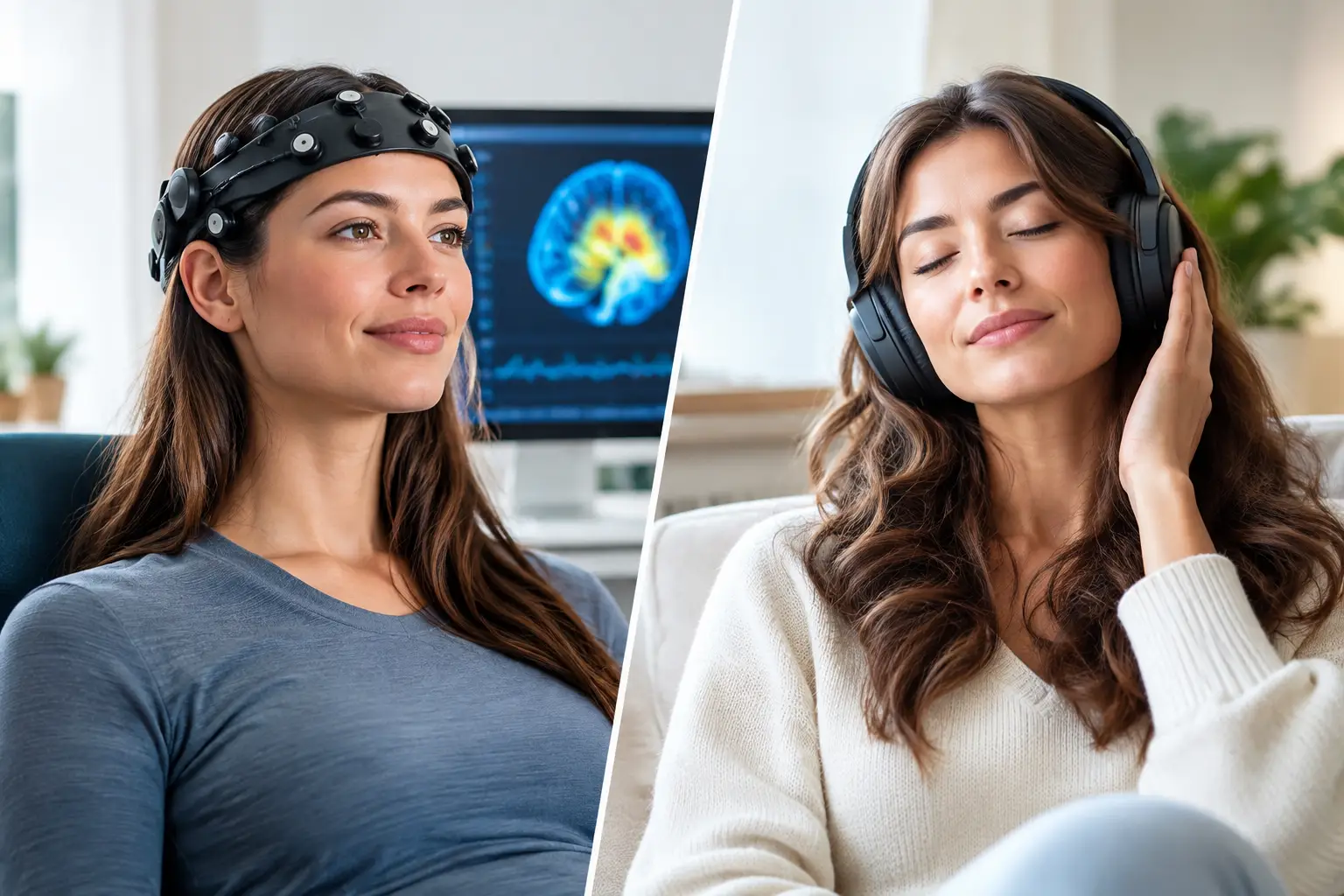
A good gamma frequency audio review should answer one practical question: can listening to 40 Hz audio help you think more clearly when your attention is scattered and your mental energy is low? For busy professionals, the appeal is obvious. You want a calmer mind and stronger concentration without adding another complicated routine, supplement stack, or hour of meditation to the day.
The honest answer is promising, but not magical. Gamma-focused audio can be a useful part of a focus ritual, especially when it helps you transition out of reactive, distracted work and into one clearly defined task. Its value depends on the recording, your listening environment, your expectations, and whether you use it consistently enough to notice a pattern.
What Gamma Frequency Audio Is Designed to Do
Gamma brainwave activity is commonly discussed in relation to high-level cognitive processes such as attention, sensory processing, working memory, and conscious perception. A 40 Hz frequency sits within the gamma range. Audio programs use tones, pulses, or binaural beat-style differences between channels to encourage the brain to synchronize with a target rhythm, a process often called brainwave entrainment.
That wording matters. Audio does not force your brain into a permanent gamma state. It offers a rhythmic cue that may make focused attention easier for some listeners, particularly when the rest of the environment supports concentration.
Think of it less like flipping a switch and more like creating the conditions for better work. Closing unnecessary tabs, putting your phone away, choosing one meaningful priority, and pressing play all send the same message: this is time to focus.
Gamma Frequency Audio Review: Where the Evidence Stands
There is legitimate scientific interest in gamma rhythms, including research into 40 Hz sensory stimulation and its potential relationship to cognition and brain health. However, the research is still developing, and the strongest findings from controlled laboratory settings should not be confused with a guarantee that any consumer audio track will improve memory, prevent cognitive decline, or solve persistent brain fog.
Studies of auditory stimulation and binaural beats have produced mixed results. Some people report improved concentration, a more alert mental state, or an easier time staying with demanding work. Other people notice little beyond a pleasant background sound. Individual differences are real: sleep quality, stress level, hearing, baseline attention, and the type of task all affect the experience.
This is why the best claim is not that gamma audio makes everyone smarter. A more credible claim is that it can support a repeatable focus practice. If it reduces the friction of starting hard work and helps you remain present for 15 minutes, that is already valuable.
Claims around 432 Hz deserve the same balanced view. Many listeners find this tuning calming or emotionally pleasant, but broad claims that 432 Hz has unique medical or cognitive effects are not firmly established by high-quality evidence. Treat it as part of the listening experience, not as a substitute for sleep, medical care, movement, nutrition, or professional support.
What a Quality Session Should Feel Like
The best gamma audio sessions are usually not dramatic. You may feel more settled, mentally awake, and less tempted to switch tasks. Rather than a rush of energy, the useful outcome is often quieter: the report gets written, the proposal becomes easier to organize, or the afternoon slump stops dictating your schedule.
A well-designed track should also respect the reality of a working brain. Constantly intense stimulation can become fatiguing or distracting. Many people respond better to a structured progression that begins with a calmer entry point before moving toward more focused gamma-oriented sound. That transition can help the mind disengage from meetings, notifications, and internal noise before asking it to perform.
The FlowWave Audio follows this practical approach with a 15-minute sequence moving from Alpha toward Gamma 40 Hz, combined with 432 Hz tones. For someone who wants a simple, one-time daily cue for deeper work, that format is more realistic than trying to maintain a complex optimization routine. For readers who want more information about The Flowwave Audio, here is the link: https://flowwave-neuroflowlabs.lovable.app
The Real Benefits Depend on the Task
Gamma frequency audio is not equally suited to every moment of the day. It may work well for writing, studying, planning, reading, design work, analysis, or other tasks that benefit from sustained engagement. If you are preparing for a difficult conversation, it may also help you pause and collect your thoughts rather than entering the situation mentally scattered.
It is less useful when your job requires you to hear colleagues, monitor changing conditions, or respond quickly to external sounds. Avoid using it while driving, exercising in traffic, operating equipment, or doing anything where awareness of your surroundings is essential.
Your task matters because focus is not the same as productivity. A soundtrack cannot rescue an unclear priority list. Before listening, decide exactly what you will work on. One defined outcome – outline the presentation, answer the five critical emails, review the budget – gives your attention somewhere to go.
How to Test Gamma Audio Without Fooling Yourself
Novelty can feel powerful. The first few sessions may seem transformative simply because you finally gave yourself permission to work without interruptions. That is not a reason to dismiss the experience. It is a reason to test it thoughtfully.
Use the same audio at roughly the same time for five to seven workdays. Keep the session short and pair it with one demanding task. Afterward, note whether you started faster, stayed on task longer, felt less mentally depleted, or produced better work than usual. A few brief observations will tell you more than chasing a dramatic sensation.
Headphones are often helpful for recordings that use stereo effects, especially binaural-beat formats. Keep the volume moderate. Louder is not more effective, and audio intended for focus should never leave your ears feeling strained or your mind feeling overstimulated.
If you are sensitive to sound, begin at a low volume and listen during a low-stakes work block. If you experience headaches, anxiety, dizziness, agitation, or discomfort, stop the session. People with neurological conditions, a history of seizures, hearing concerns, or significant mental health symptoms should check with a qualified clinician before using brainwave-focused audio.
What Gamma Audio Cannot Replace
Mental fatigue is often a signal, not a personal failure. When sleep has been short for weeks, your calendar is overloaded, or stress has become constant, no 40 Hz track can fully compensate. Audio can make the next focused block feel more accessible, but it cannot replace recovery.
The same is true for persistent memory changes, severe concentration problems, depression, anxiety, medication effects, or other health concerns. Those deserve proper attention rather than being covered up with another productivity tool.
Used wisely, gamma frequency audio belongs in the middle ground between wellness and performance. It is not a cure-all, and it does not need to be one. The right recording can become a small, reliable boundary between distraction and meaningful work.
Try it when you have a task that matters, give it enough repetition to evaluate fairly, and pay attention to the quality of your work afterward. A sharper mind is rarely built through one dramatic breakthrough. More often, it returns through simple practices you can actually keep.