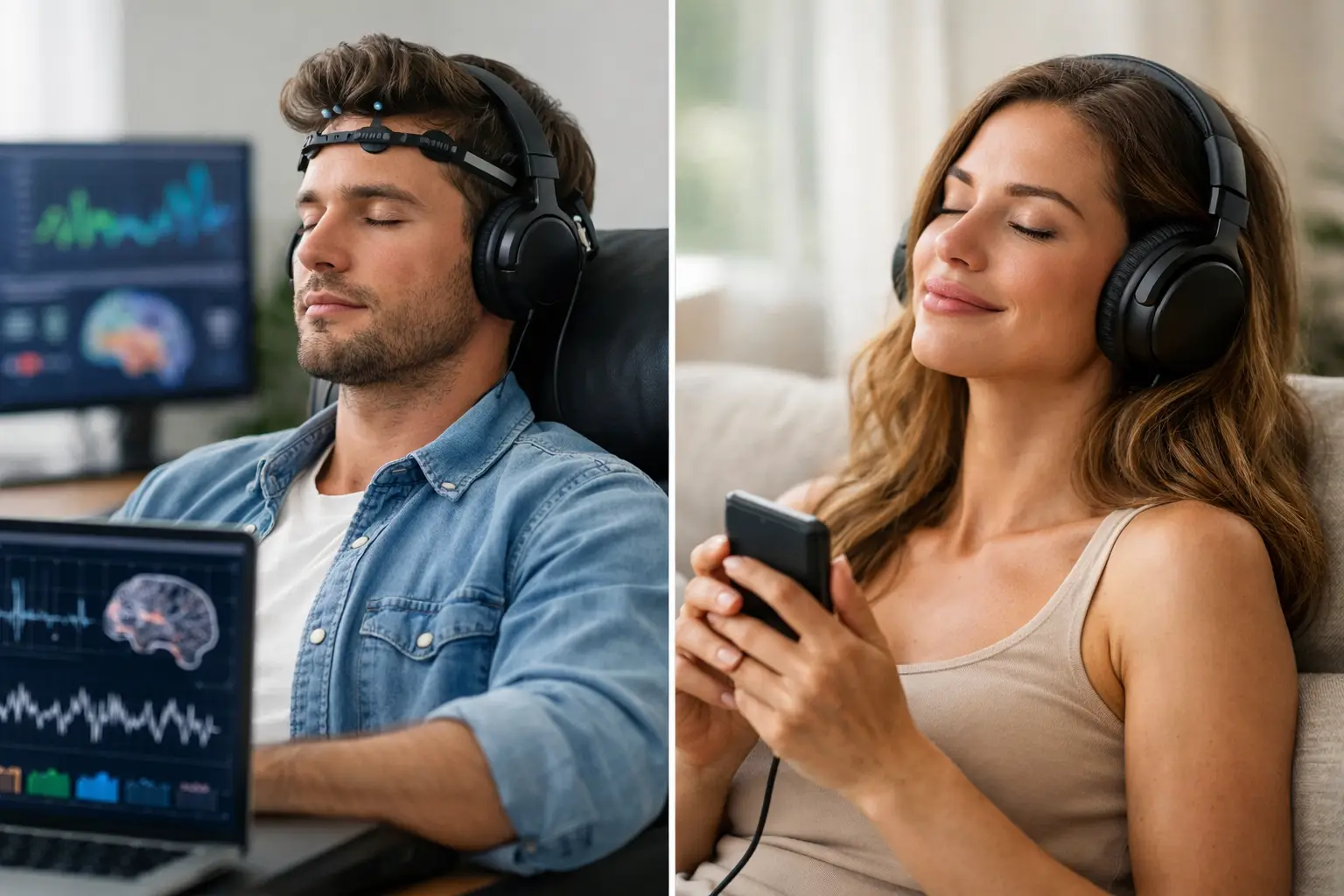
Tag: #theflowwave audio

  • Focus Enhancement Audio Review for Deep Work

    Focus Enhancement Audio Review for Deep Work

    That 2:30 p.m. feeling is familiar to almost every ambitious professional: the calendar is full, the work matters, but your mind starts skipping from task to task. Coffee may make you more alert without making you more focused. Another productivity app can add one more system to manage. This focus enhancement audio review looks at a simpler option – using carefully designed sound to create a calmer runway into concentrated work.

    The short version is that focus audio can be useful, especially when it becomes a consistent pre-work cue rather than a miracle fix. The right track may help reduce the mental noise that makes it hard to begin, settle your attention before demanding work, and make a deep-work block feel more intentional. But results depend on the listener, the audio design, the environment, and whether you pair it with work habits that protect your attention.

    What Focus Enhancement Audio Is Actually Trying to Do

    Focus enhancement audio is not the same as a generic playlist, ambient coffee-shop noise, or a meditation session designed mainly for relaxation. It is usually built around brainwave entrainment, a method that uses rhythmic sound patterns to encourage the brain toward a particular state of activity.

    Some programs use binaural beats, which present slightly different tones to each ear through headphones. Others use rhythmic pulses, layered frequencies, soundscapes, or a combination of these approaches. The goal is not to force your brain into a state against its will. It is to give your nervous system a steady, low-effort cue that can support the transition from scattered attention to quieter, more sustained concentration.

    For knowledge work, the timing of that transition matters. The first 10 minutes of a proposal, presentation, strategy document, or difficult creative task are often where resistance is highest. Your brain is still carrying the residue of messages, meetings, decisions, and unfinished tasks. A focused listening ritual can help create separation between that noise and the work in front of you.

    Focus Enhancement Audio Review: What the Evidence Supports

    The science is promising, but it deserves a measured reading. Research into auditory entrainment and binaural beats has found potential benefits for attention, relaxation, mood, and certain cognitive tasks. At the same time, studies vary widely in the tones used, session length, listener expectations, and ways researchers measure outcomes. That makes broad promises about instant intelligence or guaranteed memory gains hard to defend.

    A more realistic expectation is this: audio may help you arrive at a focused state more reliably. That is valuable. High-quality work is often less about finding a dramatic surge of motivation and more about lowering the friction between intention and action.

    There is also a behavioral effect that should not be dismissed. If you use the same short audio session before focused work, your brain can begin to associate that sound with a protected period of concentration. Over time, the ritual itself can become a powerful cue. It is similar to sitting in the same chair to write or taking the same walk before planning – except it takes less setup and travels easily.

    That does not mean every listener will notice the same effect. People who are highly sensitive to sound may find certain tones distracting. Others may respond better to neutral ambient audio than pulsing frequencies. And if chronic sleep debt, anxiety, burnout, or an overloaded workload is driving your brain fog, audio can support you, but it cannot replace rest, professional care, or better boundaries.

    What a Strong Focus Track Should Feel Like

    The best focus audio does not demand your attention. It stays in the background while giving your mind less to latch onto. Lyrics are often counterproductive for reading, writing, analysis, and other language-heavy work because your brain starts processing the words. Sudden changes in volume, overly dramatic music, or harsh high frequencies can create the same problem.

    A well-designed track should feel steady, comfortable, and purposeful. You may notice that your breathing settles, the urge to check your phone loses some force, or starting the task feels less emotionally heavy. The effect can be subtle. That is not a weakness. Deep work rarely begins with fireworks. More often, it begins when the internal chatter drops just enough for you to stay with one problem.

    The FlowWave Audio is designed around that practical need: a 15-minute daily protocol that moves through Alpha toward Gamma 40 Hz frequencies with 432 Hz tones. Its appeal is the low-friction format. Rather than asking you to commit to a long meditation practice, take another supplement, or build a complicated morning routine, it gives you a defined listening window before a focus block. Get The Flowwave Audio here: https://flowwave-neuroflowlabs.lovable.app

    Its strongest fit is for people whose challenge is mental switching cost – the executive moving from calls to strategic thinking, the entrepreneur carrying six open decisions, the creative facing a blank page, or the student trying to make study time actually count. If you want total silence, or you do your best work with familiar instrumental music, this format may not be your first choice. Personal preference still matters.

    How to Test It Without Fooling Yourself

    Expectations can influence any wellness tool. The cleanest way to evaluate focus audio is to test it in a repeatable way rather than judging it by one unusually good or bad afternoon.

    Use the same track for five to seven work sessions. Listen at roughly the same time of day, ideally before a task that requires sustained concentration. Keep your phone out of reach, decide the one outcome you want from the session, and start work immediately after the audio ends. Then note three things: how long it took to begin, how often you switched tasks, and how mentally drained you felt afterward.

    This matters because “I felt focused” is vague. A better signal is finishing the section you had avoided, reviewing fewer emails during a writing block, or staying present in a complex spreadsheet for 45 minutes without chasing distractions. If the audio helps you create those outcomes more consistently, it is earning its place in your routine.

    Headphones are usually worth using when a program relies on binaural elements. Keep the volume at a comfortable level. Louder is not better, and listening should never create pressure, ringing, or irritation. Avoid using any focus audio while driving, cycling in traffic, operating machinery, or doing anything that requires full awareness of your surroundings.

    Where Audio Fits in a Real Focus Strategy

    Think of focus audio as an entry ritual, not a substitute for a work system. It works best alongside a clear task, a realistic time block, and fewer interruptions. If your inbox and chat alerts remain open, no frequency can make distraction-free concentration effortless.

    For many people, a useful pattern is 15 minutes of listening followed by 45 to 90 minutes of protected work. The audio marks the transition. The work block is where the value compounds. On especially difficult days, use it before planning rather than forcing yourself straight into output. A calmer plan can prevent three hours of reactive effort.

    It also helps to distinguish focus from energy. You may need a walk, water, food, daylight, or sleep more than another mental performance tool. Audio can be a thoughtful part of brain health and productivity, but it should not become a reason to ignore a body that has been running on empty.

    The Bottom Line for Busy, Mentally Tired People

    Focus enhancement audio is most compelling when you are tired of relying on willpower to get started. It offers a brief, repeatable pause between the noise of the day and the work you want to do well. The benefits are likely to be gradual and practical rather than dramatic: less resistance, a calmer mind, and more sessions where your attention stays where you put it.

    Give it enough consistency to judge fairly, then let the results decide. If 15 quiet minutes helps you return to your work with more clarity and less friction, that small ritual can become one of the most useful parts of your day.


  • Audio Learning Benefits for a Sharper Mind

    Audio Learning Benefits for a Sharper Mind

    Your best ideas rarely arrive when you have an hour to spare at a desk. They show up between meetings, on a walk, during a commute, or while making dinner. That is where audio learning benefits become practical: they turn otherwise unavailable moments into opportunities to absorb, revisit, and connect useful information.

    For ambitious professionals, creators, and lifelong learners, audio is not a replacement for every form of learning. Complex charts, visual demonstrations, and dense technical material still require focused reading or hands-on practice. But when mental energy is limited and the screen has already taken enough from you, listening can be one of the most sustainable ways to keep your mind engaged without adding another demanding task.

    Why Audio Learning Benefits Busy Brains

    Audio works because it meets real life where it happens. A book, lecture, language lesson, or guided explanation can travel with you. Instead of treating learning as something that only happens in a perfectly organized block of time, you can build it into the margins of your day.

    That flexibility matters more than it may seem. Consistency is one of the strongest advantages in any learning practice. Listening for 15 or 20 minutes most days can keep an idea active in your mind far more effectively than saving every lesson for a single, exhausting weekend session.

    There is also a cognitive advantage to changing the channel through which you take in information. If your workday is built around email, documents, dashboards, and video calls, more visual input can leave you mentally saturated. Audio gives your eyes a break while allowing your attention to remain directed. For many people, that creates a calmer entry point into learning, especially during periods of screen fatigue or brain fog.

    The key is not passive consumption. Listening becomes valuable when you approach it with a clear intention: understand one idea, revisit an important concept, prepare for a conversation, or let a useful framework settle in before applying it. A focused listening habit can make information feel less like another item on your to-do list and more like part of how you think.

    Better Recall Comes From Repetition and Retrieval

    Hearing something once is rarely enough to remember it. The real value of audio is that it makes repetition easy. You can replay a key chapter before a meeting, revisit a lesson on your morning walk, or listen to a short explanation several times across a week.

    That repeated exposure strengthens familiarity. But familiarity alone is not mastery. To make learning stick, add small moments of retrieval. Pause the audio and explain the main point in your own words. At the end of a segment, ask yourself what you would do differently because of what you heard. Send yourself a brief voice note with one takeaway. These simple actions move information from recognition toward usable memory.

    Audio is particularly effective for material that depends on language, stories, sequences, or perspective. Leadership principles, business case studies, history, sales training, interviews, and language practice all gain power from voice. Tone, pacing, and emphasis can communicate meaning that is easy to miss in text alone.

    It depends on the subject, of course. If you need to learn a spreadsheet model, anatomy diagram, or software interface, audio should support visual instruction rather than replace it. The strongest approach is often blended: listen for the concepts, then use reading, notes, or practice to work through the details.

    The overlooked advantage: lower friction

    Many learning plans fail before they begin because they ask too much. A new course becomes another tab. A reading list becomes another source of guilt. Audio lowers the starting barrier. Press play, put on headphones, and begin.

    That low-friction start is valuable when motivation is inconsistent. You do not need perfect concentration to start listening. Often, focus improves after you begin. The first few minutes create a transition away from scattered thoughts and toward a single idea. Over time, that ritual can become a reliable cue that tells your brain it is time to settle, learn, and think more clearly.

    Audio Learning Benefits for Focus and Mental Energy

    Learning is not just about information intake. It is also about protecting the quality of attention you bring to the information. If you try to learn when your mind is overloaded, every paragraph can feel like it slides away before you finish it. Audio can offer a gentler on-ramp, particularly when paired with a low-distraction activity such as walking, stretching, or organizing a workspace.

    The pace matters. Speeding up an audiobook may help you cover more material, but faster is not always better. If you are learning something new or high stakes, normal speed with intentional pauses usually produces better understanding. Use increased playback speed for review, familiar topics, or content that is naturally conversational.

    Your environment matters, too. Listening while driving through unfamiliar traffic is not the same as listening during a familiar commute. Listening while answering messages is not focused learning at all. Choose moments that allow enough attention for the material without requiring you to create an elaborate routine.

    For people who spend their days making decisions, a short audio ritual can also create useful separation between tasks. Five minutes of thoughtful listening before a strategy session may help you arrive less reactive. A calm, focused audio session after lunch can help interrupt the familiar afternoon slide into distraction.

    This is where sound can serve a second purpose beyond education. Some people use carefully designed audio as a transition into deeper work. The FlowWave Audio is built as a 15-minute listening experience for people who want a simple pre-work focus ritual, using structured sound designed to support a calmer, more attentive state before demanding mental tasks. It is not a substitute for sleep, skill practice, or clinical care, but it can be a practical cue for shifting from scattered attention into intentional work. Get The Flowwave Audio here: https://flowwave-neuroflowlabs.lovable.app

    How to Build an Audio Learning Practice That Lasts

    Start with one clear learning lane. You might choose communication, creative craft, industry knowledge, a new language, or personal finance. A scattered library of saved episodes can feel productive while producing very little carryover. A narrower focus gives your brain a better chance to notice patterns and build connections.

    Then match the format to the moment. Use short lessons for transitions between tasks. Save longer interviews or audiobooks for walks and commutes. Reserve the most complex material for a time when you can pause, take notes, and apply what you hear. This is not about squeezing productivity out of every second. It is about choosing the right level of effort for the attention you actually have.

    A simple weekly rhythm can help. Pick one primary audio resource, listen in short sessions across several days, and identify one action or insight to test before moving on. That could mean trying a new meeting question, changing how you plan your workday, practicing a phrase, or using a new creative prompt. Application gives learning a purpose.

    Avoid the trap of treating audio as background noise all day. Constant input can crowd out reflection, reduce your ability to notice what you truly think, and leave you feeling mentally full without feeling mentally clear. Leave room for silence. Let a useful idea breathe long enough for your mind to work with it.

    A More Sustainable Way to Keep Growing

    The most meaningful learning habit is not necessarily the most intense one. It is the one you can return to when work gets busy, energy dips, and life refuses to cooperate with your ideal schedule.

    Audio gives you a way to keep moving forward without demanding a desk, a blank calendar, or another burst of willpower. Use it to revisit what matters, sharpen your thinking, and create small pockets of attention that belong to you. A calmer mind does not need more noise. It needs the right input, at the right pace, with enough space to turn insight into action.

  • Brain Supplements vs Audio Training: What Works?

    Brain Supplements vs Audio Training: What Works?

    That 2:30 p.m. feeling is familiar: your calendar is full, your work matters, and yet your mind starts skipping between tabs. When comparing brain supplements vs audio training, the real question is not which option sounds more advanced. It is which one helps you think clearly, sustain attention, and protect your energy without adding another complicated demand to your day.

    For ambitious professionals, the appeal of a capsule is obvious. Take something, feel sharper, move on. Audio training offers a different promise: create a repeatable condition for focus through sound, with no pill organizer, stimulant cycle, or stack of ingredients to manage. Both can have a place. But they differ sharply in evidence, effort, safety, and the kind of result you can realistically expect.

    Brain Supplements vs Audio Training: The Core Difference

    Brain supplements, often called nootropics, are products intended to support cognition, alertness, memory, or mood through ingredients such as caffeine, L-theanine, creatine, omega-3 fatty acids, B vitamins, herbs, or proprietary blends. Some address a genuine nutritional gap. Others aim for a noticeable short-term boost. Their effects depend on the ingredient, dose, your sleep, health history, medications, and whether you actually need what the product provides.

    Audio training uses structured sound to influence your mental state or support a focused routine. This can include brainwave entrainment protocols, binaural beats, rhythmic tones, or carefully designed listening sessions. The goal is not to force intelligence into the brain. It is to make it easier to settle scattered attention, reduce mental noise, and transition into a working state where your skills are more available.

    That distinction matters. Supplements act through substances you ingest. Audio training works through a behavioral and sensory environment. One may change how alert you feel chemically. The other can help create a reliable cue that says, “Now it is time to focus.”

    What the Evidence Can and Cannot Tell You

    The brain supplement category is broad, which makes sweeping claims risky. Caffeine has strong evidence for improving alertness and reaction time, but it can also worsen anxiety, disrupt sleep, and create a familiar cycle of afternoon crashes. L-theanine may help smooth caffeine’s edge for some people. Creatine has evidence supporting cognitive performance in certain circumstances, particularly when sleep-deprived or following a low-meat diet. Omega-3s are valuable nutrients, but they are not an instant focus switch for every person.

    Many popular blends are harder to evaluate. Doses may be unclear, studies may use different formulations than the product on the shelf, and marketing often outruns the research. “Natural” does not automatically mean effective, harmless, or appropriate alongside prescription medication. If you are managing a health condition, pregnant, or taking medications, a clinician or pharmacist should be part of the conversation.

    Research on brainwave entrainment and focus-oriented audio is promising but mixed. Some studies suggest rhythmic auditory stimulation may support attention, relaxation, or certain cognitive tasks, while effects vary widely by protocol, task, listener expectations, and listening environment. It should not be presented as a medical treatment or a replacement for sleep, therapy, or care for a cognitive concern.

    Still, mixed evidence does not mean useless. A focused audio ritual can be valuable because performance is not only about biology. It is also about state management. If a 15-minute session helps you leave reactive mode, stop reaching for your phone, and begin meaningful work with a calmer mind, that is a practical benefit you can feel in the quality of your day.

    Be Careful With Frequency Claims

    Specific frequencies are often marketed as though they produce precise, guaranteed outcomes. The reality is more nuanced. Brain rhythms such as alpha, beta, and gamma are patterns observed in neural activity, not buttons that can be pressed on demand. Listening to audio associated with a frequency does not guarantee that your brain will match it or that memory will suddenly improve.

    The quality of the protocol, your baseline stress level, and your consistency matter more than a single number in a product description. Claims around tuning standards such as 432 Hz are especially worth treating as wellness preferences rather than established clinical facts. If a sound feels pleasant and helps you create a focused ritual, that experience has value. Just keep expectations grounded.

    The Trade-Off Most People Miss: Friction

    The best focus strategy is not the one with the longest ingredient list or the most impressive jargon. It is the one you will use consistently without creating new problems.

    Supplements can be low-friction in the moment, but they may bring hidden complexity: researching brands, checking doses, tracking tolerance, timing intake, monitoring side effects, and deciding whether a benefit is real or simply the relief of not being tired. Stimulant-based products can also encourage you to work past the point where rest would be the wiser performance move.

    Audio training has a different kind of friction. You need a quiet window, headphones or speakers, and the willingness to pause before you begin. For many people, that is a feature rather than a drawback. It creates a boundary between constant input and deliberate attention. There is no need to remember a dose, cycle ingredients, or wonder whether a formula will interact with something else.

    If your challenge is severe sleepiness, a medical issue, or a nutrient deficiency, audio will not solve the root cause. If your challenge is a mind that feels overstimulated, scattered, and unable to settle into deep work, a short listening practice may be a more direct fit than another capsule.

    When a Supplement May Make Sense

    A supplement can be reasonable when it fills a confirmed nutritional need or supports a specific, well-understood goal. For example, someone who does not consume enough omega-3-rich foods may benefit from discussing supplementation with a clinician. Someone who tolerates caffeine well may use a modest, early-day dose strategically.

    The key is to avoid treating supplements as a substitute for the foundations of mental performance: sufficient sleep, regular movement, protein and fiber-rich meals, hydration, social connection, and breaks from relentless stimulation. A supplement can support a strong foundation. It cannot reliably build one for you.

    Choose products with transparent labels and avoid proprietary blends that hide exact dosages. Introduce one change at a time. That simple rule makes it easier to notice what is helping, what is not, and what may be quietly harming your sleep or mood.

    When Audio Training May Be the Better First Move

    Audio training is especially compelling when you want a non-ingestible way to shift gears before demanding work. It suits the entrepreneur moving from meetings into strategy, the creative facing a blank page, the student who cannot stay with a chapter, and the experienced professional who is tired of ending the day busy but mentally unsatisfied.

    The strongest use case is not passive listening while multitasking. It is intentional use. Set aside 15 minutes before a priority task. Put your phone out of reach. Let the audio become a consistent pre-work cue, then move directly into the work that matters. Over time, the cue itself can make starting feel less effortful.

    The FlowWave Audio is designed around this simple practice: a 15-minute listening experience intended to help calm mental clutter and support a transition toward deep focus and flow. Its Alpha-to-Gamma 40 Hz sequence is not a shortcut around healthy habits. It is a low-effort tool for people who want a clearer entry point into the work they already know they are capable of doing. Get The Flowwave Audio in this link: https://flowwave-neuroflowlabs.lovable.app

    A Smarter Way to Decide

    Instead of asking which option is universally better, start with the bottleneck in front of you. If you are under-slept, address sleep. If your energy crashes after a high-sugar lunch and three coffees, look at food, caffeine timing, and recovery. If you feel physically well but mentally fragmented, test a focused audio routine before adding another substance to your system.

    Give any approach enough time to evaluate honestly. For audio, try the same session before your most important task for two weeks and notice how quickly you begin, how often you switch tasks, and how you feel afterward. For supplements, change only one variable, use it as directed, and pay close attention to sleep, anxiety, digestion, and whether the claimed benefit holds up on ordinary workdays.

    A sharper mind rarely comes from one dramatic intervention. More often, it comes from removing friction between your intention and your attention. Choose the tool that helps you show up calm, present, and ready to do the work that deserves your best thinking.

  • Alpha Gamma Frequencies vs Binaural Beats

    Alpha Gamma Frequencies vs Binaural Beats

    Your calendar is full, your notifications are louder than your priorities, and by midafternoon your mind feels like it has 20 browser tabs open. That is why alpha gamma frequencies vs binaural beats is more than a technical comparison. It is a practical question: what kind of audio support can help you feel calmer, think more clearly, and stay with the work that matters?

    The short answer is that these are not quite competing things. Alpha and gamma describe brainwave frequency ranges associated with different mental states. Binaural beats are one audio technique designed to encourage the brain to perceive a particular rhythmic difference. One refers to the destination you may be targeting. The other refers to a possible vehicle for getting there.

    That distinction matters when you want more than background sound. If your goal is a reliably focused work session, creative momentum, or a calmer transition out of stress, the structure of the audio experience matters as much as the label on it.

    Alpha Gamma Frequencies vs Binaural Beats: The Core Difference

    Brainwaves are patterns of electrical activity measured in the brain. Researchers group them into frequency bands, although the boundaries are approximate and brain activity is far more complex than one single frequency at a time.

    Alpha activity, commonly around 8 to 12 Hz, is often associated with relaxed alertness. Think of the feeling after you settle into a task, before pressure takes over: awake, present, but not mentally clenched. For many people, an alpha-oriented listening phase can be useful before demanding work because it supports a calmer starting point.

    Gamma activity is usually described as faster activity, often above 30 Hz. A 40 Hz signal falls within this range. Gamma rhythms have been studied in connection with attention, perception, learning, and the coordination of information across brain networks. That does not mean a 40 Hz audio track automatically creates genius-level focus. It means gamma is a meaningful area of research for people interested in cognitive performance.

    Binaural beats work differently. A listener hears two slightly different tones, one in each ear. The brain perceives a third rhythmic beat equal to the difference between the tones. For example, tones separated by 10 Hz may create a perceived 10 Hz binaural beat. Because the two tones must be delivered separately, stereo headphones are generally required.

    So, alpha and gamma are target ranges. Binaural beats are one method that may be used to present a rhythmic target. An audio program can use binaural beats to aim at alpha or gamma ranges, but it can also use other sound-design methods, such as isochronic pulses, amplitude modulation, music, tonal layers, or carefully sequenced soundscapes.

    What Each Approach May Feel Like

    People often choose audio based on the state they want now, not the terminology. Alpha-oriented sound is usually the better fit when you feel overstimulated, tense, mentally scattered, or unable to get started. It can create a more spacious internal environment, making it easier to begin without forcing yourself through resistance.

    Gamma-oriented sessions may appeal when you are already reasonably settled and need sharper engagement. This can be useful for analytical work, studying, writing, strategy, or any task that requires you to hold details and the larger picture at once. The experience should feel focused rather than frantic. If a track leaves you wired, distracted, or uncomfortable, it is not serving the goal.

    Binaural beats may feel subtle. Some listeners report that they help reduce mental chatter or make concentration easier, while others notice little beyond a pleasant tone. Response varies with the audio quality, your environment, headphone fit, expectations, sleep, stress level, and the task in front of you.

    That variation is not a failure of the listener. Your brain is not a machine with one perfect setting. A person coming off a stressful meeting may need a calming alpha transition before deep work. Someone who slept well and has a clear plan may prefer a more activating focus session immediately.

    Why a Sequence Can Be More Useful Than One Frequency

    The biggest limitation of single-frequency thinking is that high performance rarely begins with intensity. When your nervous system is overloaded, trying to jump straight into a highly stimulating focus track can feel like pressing the accelerator with the parking brake on.

    A thoughtful sequence starts by reducing internal noise, then gradually guides attention toward a more engaged state. This is the appeal of moving from alpha into gamma rather than treating either range as a stand-alone solution. You first create the conditions for calm attention, then support the sustained engagement required for meaningful work.

    For professionals and creatives, this mirrors the natural rhythm of productive effort. You do not need to feel hyped up to enter flow. You need enough calm to stop reacting to every interruption and enough cognitive energy to stay connected to the task.

    The FlowWave Audio is built around this principle: a concise 15-minute progression from alpha into 40 Hz gamma, paired with 432 Hz tonal elements. It is designed for people who want a simple pre-work ritual instead of another complicated protocol, lengthy meditation session, or stimulant-dependent productivity routine. Get The Flowwave Audio in this link: https://flowwave-neuroflowlabs.lovable.app

    What the Research Can and Cannot Promise

    Brainwave entrainment is an active area of study, but it deserves a balanced view. Some research suggests rhythmic auditory stimulation and binaural beats may influence attention, anxiety, mood, or cognitive performance in certain settings. Results are mixed, however, and study designs, audio protocols, and outcome measures differ widely.

    A 40 Hz auditory stimulation approach has also attracted research interest, including early work related to attention and neurological health. Still, audio should not be presented as a treatment for memory loss, depression, ADHD, dementia, or any medical condition. It is a wellness and performance tool, not a substitute for clinical care, sleep, movement, nutrition, or treatment recommended by a qualified professional.

    The most useful standard is practical and honest: does the listening routine help you arrive at your work calmer, clearer, and more capable of sustained attention over time? Track your own experience rather than chasing dramatic claims.

    How to Choose the Right Listening Method

    Start with your current state. If you are anxious, mentally tired, or spinning between tasks, begin with audio that emphasizes calm alertness. Alpha-oriented sound may make it easier to regain your footing before you ask your brain to perform.

    If you feel stable but under-engaged, a gamma-oriented focus session may be worth testing. Use it before a defined block of cognitively demanding work, not while multitasking through messages. The goal is not to have audio playing all day. The goal is to create a repeatable transition into deliberate focus.

    Choose binaural beats when you enjoy headphones and prefer a minimal, tonal listening experience. Choose a broader entrainment protocol when you want a more guided progression that can include several auditory elements and target states over time. Neither is universally better. The better choice is the one you will use consistently and that supports the result you can actually feel in your work.

    Give any new audio routine a fair trial. Use the same time of day for one to two weeks, pair it with one clear activity, and notice your ability to start, stay engaged, and recover from distraction. A 15-minute session before planning, writing, study, or strategy work can reveal more than listening randomly while scrolling.

    A Few Smart Safety Considerations

    Keep the volume comfortable. More intensity does not create more benefit, and loud listening can contribute to hearing strain. Do not use focus audio while driving, operating equipment, or doing anything that requires full awareness of your surroundings.

    If you have epilepsy, a seizure history, severe sound sensitivity, tinnitus, or a neurological condition, speak with a qualified clinician before experimenting with brainwave-oriented audio. And if a track causes headaches, agitation, dizziness, or discomfort, stop using it. A better mind state should feel supportive, not forced.

    Your best cognitive tools are often the ones that lower friction. Find a quiet place, put on headphones if the method calls for them, let your mind settle, and give one important task your full attention. The value is not in chasing a perfect frequency. It is in building a small daily moment where clear thinking becomes easier to access.

  • Neurofeedback vs Audio Entrainment Compared

    Neurofeedback vs Audio Entrainment Compared

    Your focus slips at 2:30 p.m. You reread the same email, lose your train of thought in a meeting, and finish the day mentally spent despite barely moving. If you have been researching neurofeedback vs audio entrainment, you are probably not looking for another complicated wellness routine. You want a calmer, sharper brain that can stay with the work that matters.

    Both approaches are designed around the brain’s electrical activity, but they ask very different things of you. One is a personalized training process that typically requires equipment and a practitioner. The other uses carefully designed sound to support a desired mental state during a short listening session. The better choice depends less on hype and more on your goal, budget, schedule, and willingness to be actively measured.

    The core difference: feedback versus stimulation

    Neurofeedback is a form of brain training. Sensors placed on the scalp measure EEG activity in real time. A computer translates selected patterns into feedback, often through sound, video, or a game-like display. When your brain produces the target pattern, the feedback responds positively. Over repeated sessions, the theory is that your brain learns to spend more time in that pattern.

    Audio entrainment does not read your brain activity. Instead, it presents rhythmic auditory cues, such as binaural beats, isochronic tones, or music layered with pulsing frequencies. The aim is to encourage the brain toward a rhythm associated with a particular state, such as relaxed alertness or focused attention. You listen. There are no electrodes, performance scores, or real-time adjustments.

    That difference is meaningful. Neurofeedback is closed-loop: the system responds to your individual EEG. Audio entrainment is open-loop: the protocol delivers the same intended signal without confirming how your brain responds in that moment.

    Neurofeedback: personalized, involved, and potentially expensive

    For someone dealing with a specific concern under professional care, neurofeedback can be appealing because it is individualized. A qualified provider may begin with an assessment, decide which patterns to train, then alter the protocol as sessions progress. The process creates a clear sense of participation and measurement that many high-achievers appreciate.

    It also comes with practical trade-offs. Sessions often require appointments, repeated visits, and a meaningful financial commitment. Home systems exist, but they still involve sensors, software, setup, and learning how to use the data responsibly. Results can vary based on the protocol, provider skill, the condition being addressed, and the consistency of training.

    The research picture is also more nuanced than bold marketing claims suggest. Neurofeedback has been studied across attention, anxiety, sleep, and performance-related applications, but study quality and outcomes vary. It should not be viewed as a guaranteed treatment or a replacement for medical or mental health care. If you have a diagnosed neurological or psychiatric condition, discuss options with a licensed clinician who understands your history.

    For the right person, the effort may be worth it. If you value individualized monitoring, have a targeted issue to explore, and can commit to a structured program, neurofeedback offers a higher-touch path.

    Audio entrainment: low-friction support for daily mental states

    Audio entrainment is built for a different reality: the professional with a full calendar, the founder switching between decisions, or the creative who needs a reliable transition into deep work. Rather than adding another appointment, it gives you a repeatable cue to put on headphones, reduce outside noise, and signal that it is time to focus or reset.

    Its biggest advantage is simplicity. A short session can fit before a demanding task, during an afternoon slump, or as part of a wind-down routine. That low barrier matters. The best mental-performance practice is often the one you can repeat when work is busy and motivation is low.

    The science behind entrainment is promising but should be approached with reasonable expectations. Auditory rhythms can influence attention, relaxation, and perceived mental state for some listeners, especially when used in a supportive environment. But individual response differs. Your sleep, stress load, hearing setup, caffeine intake, and the task in front of you can all affect the experience.

    Audio is not mind control, and it is not a shortcut around fundamentals. It works best as a condition-setting tool alongside sleep, hydration, movement, meaningful breaks, and a work environment that protects attention. Think of it as a focused mental runway, not a replacement for the plane.

    Neurofeedback vs audio entrainment: what each is best for

    The most useful comparison is not which method is universally superior. It is which one fits the problem you are trying to solve.

    Neurofeedback may be a stronger fit when you want personalized EEG-based training, are working with a knowledgeable provider, and are prepared for a multi-session process. Its central value is specificity. The protocol can respond to measured patterns rather than relying on a generalized experience.

    Audio entrainment may be the better fit when your main need is consistent access to calm focus, a smoother shift into work, or a simple way to recover from mental overload. Its central value is accessibility. You can make it part of your day without scheduling, sensors, or a complicated learning curve.

    There is also room for both. Some people use clinician-guided neurofeedback as part of a broader care plan and use audio entrainment at home to create more intentional focus routines. They serve different functions, so they do not have to be treated as rivals.

    What results should you realistically expect?

    A realistic goal is not to feel transformed after one session. It is to notice a more dependable transition: less resistance before starting, fewer scattered thoughts in the first stretch of work, or a clearer sense of calm after a mentally demanding day. Those shifts can compound when the practice becomes consistent.

    With neurofeedback, progress is usually evaluated over a series of sessions and may include practitioner observations, symptom tracking, or standardized measures. With audio entrainment, your feedback is more practical: Did you begin the task faster? Did you stay with it longer? Did you feel less depleted afterward?

    Track one or two signals for two weeks rather than chasing a dramatic sensation. For example, note how long it takes to settle into your first important task and rate your afternoon mental energy from one to ten. Simple data can reveal whether a tool is genuinely supporting your performance or merely adding another tab to your routine.

    How to choose without overthinking it

    Start with the level of support you need. If brain fog, poor focus, or anxiety is new, severe, worsening, or affecting daily functioning, seek professional guidance first. Sudden cognitive changes deserve medical attention, not a self-experiment.

    If your challenge is the familiar pressure of modern knowledge work – too many inputs, too little mental space, and difficulty getting into a productive rhythm – start with the lower-friction option. Give an audio practice enough repetition to evaluate it fairly. Use good headphones if the protocol calls for them, choose a consistent time, and pair the session with one clearly defined task.

    The FlowWave Audio is designed around that practical use case: a 15-minute daily listening ritual for people who want to move from mental noise toward focused, sustainable flow without pills or an elaborate routine. Its Alpha-to-Gamma sequence is meant to support a deliberate transition into clearer, more engaged work. Get your copy of The Flowwave Audio here: https://flowwave-neuroflowlabs.lovable.app

    Do not confuse complexity with effectiveness. A sophisticated EEG system may be valuable when personalization is necessary. But when your real obstacle is that you cannot reliably create a quiet, focused starting point, a simple practice you will actually use can be the more intelligent investment.

    Your brain does not need more pressure to perform. It needs a repeatable cue that tells it when to settle, attend, and begin. Choose the method that fits your life well enough to become a ritual, then let consistency do the quiet work.

  • Can Sound Frequencies Reduce Distractions?

    Can Sound Frequencies Reduce Distractions?

    A Slack notification lands just as you begin to untangle a difficult problem. Someone starts talking nearby. Your mind follows each interruption before you have a chance to stop it. If you have wondered, can sound frequencies reduce distractions, the practical answer is yes, sometimes – but not by overpowering your environment or forcing your brain into focus.

    The right sound can make distractions less noticeable, settle mental restlessness, and give your attention a more stable place to land. The wrong sound can become one more thing competing for your limited cognitive bandwidth. The difference comes down to the task, the audio itself, and the state of your mind when you press play.

    Why Certain Sounds Can Feel So Focusing

    Your brain is constantly deciding what deserves attention. Sudden, unpredictable sounds demand it: a phone chirp, a colleague laughing, a truck passing outside, or the half-heard conversation from the next room. These interruptions create what researchers often call an orienting response. Your attention turns toward a possible change in the environment, even when you would rather stay with the spreadsheet, draft, design, or decision in front of you.

    Steady sound changes that equation. A consistent audio backdrop can mask irregular environmental noise, making abrupt interruptions less distinct. It also gives the mind a stable sensory pattern, which many people find calming when their thoughts are scattered or their workspace is noisy.

    That does not mean a particular frequency flips a universal “focus switch.” Attention is more complex than that. Sleep quality, stress, workload, caffeine, hunger, interest in the task, and the number of open tabs all matter. Still, sound can be a useful part of a focused-work ritual because it reduces friction at the moment you need to begin.

    Can Sound Frequencies Reduce Distractions for Everyone?

    Not equally. Some people concentrate best in near silence. Others need a gentle layer of sound to keep background noise and internal chatter from taking over. If you have ever worked well in a quiet coffee shop but struggled in a silent home office, you have experienced this difference firsthand.

    The kind of work matters, too. Repetitive work, routine email, administrative tasks, and visual production often pair well with steady ambient sound or non-lyrical music. Complex reading, writing, strategic planning, and learning new information usually require more care. Lyrics, dramatic shifts, familiar songs, or a beat that begs for attention can pull your mind away from language-heavy work.

    Think of focus audio as a support layer, not a substitute for a protected work environment. It can soften distractions, but it cannot compensate for a phone lighting up every two minutes or a calendar built with no uninterrupted time.

    White Noise, Pink Noise, and Brown Noise

    Noise colors refer to the distribution of sound energy across frequencies. You do not need an acoustics degree to use them well.

    White noise has a bright, hiss-like quality. It can be effective for covering sharp, variable sounds, but some listeners find it fatiguing over time. Pink noise is softer and more balanced to many ears, often resembling steady rainfall or a gentle rush of air. Brown noise emphasizes lower frequencies and has a deeper rumble, which some people find grounding during focused work.

    There is no universal winner. If white noise feels harsh, try pink noise. If pink noise blends into the background too easily, brown noise may create more of a sense of separation from the room around you. The best option is the one you stop noticing after a few minutes.

    Music Without Words

    Instrumental music can help create momentum, especially when starting feels harder than continuing. A predictable playlist may become a useful cue: headphones on, phone away, one meaningful task open.

    For deep concentration, choose music with minimal surprises. Lo-fi beats, restrained electronic textures, classical pieces without dramatic swings, or atmospheric soundscapes can work well. Avoid treating every instrumental track as focus-friendly. Fast tempos, highly emotional melodies, and familiar songs can still hijack attention, even without lyrics.

    Binaural Beats and Brainwave Entrainment

    Binaural beats use two slightly different tones, typically delivered separately through headphones. The listener perceives a rhythmic difference between them. Brainwave entrainment audio may also use rhythmic pulses or other acoustic patterns intended to support particular mental states.

    Research in this area is promising but mixed. Some studies suggest that certain audio protocols may help some listeners with relaxation, sustained attention, or perceived mental clarity. Results vary widely, however, and the evidence does not support treating any single frequency as a guaranteed productivity tool.

    This is where a thoughtful approach matters. The goal is not to chase a number because it sounds impressive. The goal is to use a well-designed session that helps you feel calmer, more alert, and ready to protect your attention when it matters.

    Build a Sound Routine That Actually Supports Focus

    The simplest way to find your best focus audio is to test it against real work, not a vague feeling in the first 30 seconds. Choose one task category and one audio style. Use it for several sessions before deciding whether it helps.

    Start with a moderate volume. Focus audio should cover intrusive noise without becoming the main event. If you are turning it up to escape a chaotic environment, consider adding passive noise reduction, moving spaces, or scheduling the work for a quieter time when possible.

    Then give the audio a specific job. Use steady noise for open-office distractions. Use a familiar instrumental track for a short administrative sprint. Use a more intentional entrainment session before demanding creative or analytical work. When you repeat the same sequence, your brain begins to associate it with entering work mode.

    A 15-minute pre-work session can be especially useful after a fragmented morning, a draining meeting, or an afternoon slump. It creates a small transition between reactive mode and deliberate attention. No complicated routine is required. Sit down, put on comfortable headphones if the audio calls for them, and let the rest of the world become less urgent for a few minutes.

    The Limits Matter as Much as the Benefits

    Sound is not always the answer. If you are already overstimulated, even carefully designed audio may feel like too much. If you need to retain dense material, silence may outperform any soundtrack. And if a frequency-based track gives you a headache, agitation, or discomfort, stop using it. Focus should feel supported, not strained.

    People with tinnitus, sound sensitivity, migraines, or hearing concerns should be particularly cautious with volume and extended headphone use. Keep levels comfortable, take listening breaks, and seek personalized medical guidance for symptoms that persist.

    It also helps to separate focus from endurance. You may feel productive with audio for an hour, then lose clarity because you have skipped lunch, ignored fatigue, or worked without a break. A sharper mind is built through basics as well: sleep, hydration, movement, boundaries around notifications, and work that has a clear next step.

    Make Audio One Part of a Calmer, Sharper Workday

    The most effective sound strategy is usually simple. Remove the loudest distractions you can control, choose audio that fits the task, and use it consistently enough that it becomes a cue for concentration rather than another experiment to manage.

    For people who want a more intentional listening ritual, The FlowWave Audio is designed as a 15-minute daily protocol that moves from Alpha patterns toward Gamma 40 Hz, paired with 432 Hz tones. It is built for the moment when brain fog, scattered attention, or mental fatigue is keeping you from the work you know you can do. Get The Flowwave Audio here: https://flowwave-neuroflowlabs.lovable.app

    You do not need to force flow. Give your mind a steadier environment, a clear starting point, and permission to focus on one thing long enough for momentum to return.

  • Focus Improvement Exercises for a Sharper Mind

    Focus Improvement Exercises for a Sharper Mind

    Your focus rarely disappears because you suddenly became lazy or undisciplined. More often, it gets spent in tiny, invisible withdrawals: checking messages between tasks, carrying unfinished decisions in your head, switching tabs, and trying to work through an afternoon brain fog.

    The right focus improvement exercises help you reverse that pattern. They train your attention to settle, return, and stay with what matters without requiring a complicated routine or another productivity system to manage. Think of them as short reps for a sharper, calmer mind.

    Why Focus Feels Harder Than It Used To

    Most knowledge workers do not have a motivation problem. They have an attention environment problem. Your brain is constantly being asked to filter notifications, shifting priorities, open loops, and background stress while still producing high-quality work.

    That creates mental fatigue. You may sit down with every intention of finishing the proposal, writing the report, or making the important decision. Yet 30 minutes later, you have answered three emails, reread the same paragraph twice, and somehow feel depleted.

    Focus is not simply the ability to concentrate. It is the ability to direct attention deliberately, resist unnecessary switching, and recover quickly after distraction. The exercises below support all three. You do not need to do every one. Choose two or three that fit your workday, then repeat them long enough for your mind to recognize the pattern.

    Focus Improvement Exercises That Build Attention Stamina

    1. Practice the 60-Second Attention Reset

    Before a meeting, a writing session, or a demanding task, pause for one minute. Sit upright, place both feet on the floor, and notice the physical sensation of breathing without trying to force it. When your mind moves to a task, worry, or notification, label it quietly as “thinking” and return to the next breath.

    This is not about emptying your mind. It is a repetition of the exact skill focus requires: noticing that attention wandered and bringing it back without frustration.

    For a busy professional, one minute can feel almost too simple to matter. That is precisely why it works. It lowers the barrier to starting and gives your nervous system a clear transition between reactive mode and intentional work.

    2. Use a Single-Task Sprint

    Pick one meaningful outcome, set a timer for 20 to 30 minutes, and remove every input that does not support that outcome. Close extra tabs. Put your phone out of reach. Keep one document or one task visible.

    Before starting, write a short finish line: “Draft the opening section,” “Review the numbers for accuracy,” or “Outline the next client presentation.” A vague goal invites wandering. A visible finish line gives your attention somewhere specific to go.

    When the timer ends, take a brief break before deciding whether to continue. Short sprints are useful when your mind feels scattered because they make deep work feel finite. As your attention stamina improves, extend them to 45 minutes. If you are already exhausted, though, shorter is better. Pushing through severe fatigue can lead to shallow work and more errors.

    3. Train Your Visual Attention

    Choose a small, ordinary object on your desk: a pen, a mug, or a notebook. Look at it for two minutes as if you were seeing it for the first time. Notice its edges, texture, color changes, shadows, and small imperfections.

    Each time your mind drifts, return to a detail you had not noticed before. This may sound almost too basic, but it gives attention a clean target with no emotional charge and no demands. It is particularly useful before creative work, when you want to settle your mind without filling it with more information.

    The goal is not to stare perfectly. The goal is to reduce the urge to chase every thought. Over time, this can make it easier to stay present during reading, analysis, and complex conversations.

    4. Do a Working-Memory Recall Drill

    Mental clarity depends partly on working memory: the ability to hold and use information without constantly reaching for a note, browser tab, or reminder. A simple daily drill can strengthen that skill.

    Read a short paragraph from a book, article, or work document. Then look away and write down the three main points from memory. Compare your notes to the original. Do this once or twice, not for an hour.

    You can also try recalling your top three priorities before looking at your task list, or summarize the last five minutes of a meeting in one sentence. These small challenges teach your brain to encode information more actively instead of passively consuming it.

    Do not mistake this for a test you need to ace. The slight effort of retrieving information is the exercise. If you cannot remember much at first, that is useful feedback, not failure.

    5. Walk Without Input

    Take a 10-minute walk without a podcast, call, music, or scrolling. Let your attention rest on your pace, the temperature, sounds in the environment, and the movement of your body.

    For people who spend all day solving problems, silence can initially feel unproductive. But constant input keeps your brain in receiving mode. A quiet walk creates room for mental processing and can help the ideas you have been forcing begin to organize themselves.

    If a walk is not practical, stand near a window or step outside for two minutes between work blocks. Light movement and a change of visual distance can be especially helpful during the familiar afternoon dip.

    6. Create a Deliberate Distraction List

    You will remember the email you need to send, the grocery item you forgot, or the idea for another project the moment you try to focus. Trying to suppress those thoughts usually makes them louder.

    Instead, keep a blank sheet beside you labeled “Later.” When an unrelated thought appears, write a few words and immediately return to the task. You are not ignoring the thought. You are giving it a safe place without allowing it to take over your attention.

    This exercise works because many distractions are really open loops. Your brain repeats them because it does not trust they will be remembered. A simple capture system reassures it that the thought is handled.

    Pair Active Training With a Focus Cue

    Exercises build capacity, but your brain also benefits from a consistent cue that signals it is time for deeper work. This can be the same desk setup, a cup of tea, noise-reducing headphones, or a short audio ritual before your first focus sprint.

    For people who want a more passive, structured way to make that transition, The FlowWave Audio is designed as a 15-minute listening experience that supports calm, sustained concentration through a sequence of brainwave entrainment frequencies. It is not a replacement for sleep, movement, or medical care. It can, however, be a useful cue for people who want less friction between sitting down to work and entering a more focused state. Get The Flowwave Audio here: https://flowwave-neuroflowlabs.lovable.app

    The best cue is the one you will actually repeat. If you need an elaborate setup, you may only use it on ideal days. Keep it simple enough for a normal Tuesday when your calendar is full and your mind is already pulling in six directions.

    Build a Routine That Does Not Become Another Burden

    A practical starting point is a one-minute attention reset before work, one single-task sprint before checking messages, and a quiet walk or visual attention exercise later in the day. That is enough to begin changing how you use your attention.

    Consistency matters more than intensity. Five minutes practiced daily will do more for your ability to recover from distraction than a long session you abandon after three days. Track one signal that matters to you: fewer task switches, more finished work blocks, less rereading, or a calmer feeling when you begin.

    If concentration changes suddenly, significantly, or comes with persistent low mood, anxiety, sleep disruption, or memory concerns, speak with a qualified healthcare professional. Focus exercises are supportive habits, not a diagnosis or a cure.

    Your attention is one of your most valuable performance resources. Give it a few quiet, deliberate reps each day, and you may find that sharp focus feels less like something you have to chase and more like a state you know how to return to.

  • Freelancer Concentration Routine Example That Works

    Freelancer Concentration Routine Example That Works

    A client message lands at 9:07 a.m. Then you remember an invoice, check one metric, answer one email, and suddenly it is 11:30. The problem is rarely a lack of ambition. Freelancers often need a concentration routine that works because their workday has no built-in boundaries. This freelancer concentration routine example gives your brain a reliable path from scattered attention into focused, meaningful work.

    The goal is not to force yourself through eight flawless hours. It is to create one protected window where your best thinking has a place to happen. For a writer, designer, consultant, developer, or independent strategist, that can change the quality of both your output and your evenings.

    Why freelancers lose focus so quickly

    Freelance work asks your brain to switch roles constantly. You are the person doing the work, managing clients, selling the next project, handling operations, and making every small decision that keeps the business moving. Even when you are sitting still, your attention can be pulled in five directions.

    That creates a costly pattern: you begin the day in reaction mode. Messages, inboxes, project boards, and social feeds tell your brain that everything is urgent. By the time you open the task that actually matters, mental energy has already been spent deciding, checking, and context-switching.

    A useful routine does not depend on feeling motivated. It reduces the number of decisions required before deep work begins. It also recognizes a practical truth: concentration is not an unlimited resource. Protect it early, use it deliberately, and stop expecting it to survive a day full of interruptions.

    A freelancer concentration routine example for deep work

    This routine takes about 20 minutes to set up, followed by a 90-minute focus block. Adjust the timing around client calls, family responsibilities, or your natural energy pattern. The sequence matters more than the exact clock time.

    1. Start with a five-minute mental download

    Before opening email or client chat, write down everything currently competing for attention. Include unfinished tasks, worries, reminders, and ideas. Do not organize it yet. The purpose is to stop carrying those open loops in your working memory.

    Then choose one outcome for the next focus block. Make it concrete enough that you will know when it is done: draft the homepage section, complete the client proposal, edit three podcast episodes, or resolve the checkout issue.

    Avoid vague goals such as “work on marketing” or “make progress on the project.” Vague work invites wandering. A clear finish line tells your brain where to place its energy.

    2. Create a visible start signal

    Freelancers benefit from a short transition between life mode and work mode. It can be as simple as filling a glass of water, clearing your desk, putting your phone in another room, and opening only the files needed for the task.

    This is not about having a perfect workspace. It is about reducing visual and digital friction. If your inbox is visible, your brain will keep wondering what is inside it. If 22 browser tabs are open, every tab represents a possible detour.

    Use one sentence to anchor the block: “For the next 90 minutes, this is the only work that counts.” It may sound small, but a deliberate cue helps shift attention away from the constant background pressure of running a business.

    3. Use a 15-minute focus primer

    The hardest part of concentration is often the entry point. Your brain needs time to settle after meetings, school drop-offs, notifications, or a rushed morning. Instead of waiting to feel focused, build a simple primer into the routine.

    Some freelancers use a short walk, breathing practice, or quiet instrumental sound. Others prefer a structured audio session designed to support a calmer, more alert mental state. The FlowWave Audio is built around a 15-minute daily listening experience for people who want a low-effort way to move toward clearer focus and a more natural flow state before demanding work. More information about The Flowwave Audio in this link: https://flowwave-neuroflowlabs.lovable.app

    The trade-off is personal. If audio pulls your attention away from writing or analytical work, use it before you begin rather than during the task. If a consistent sound environment helps block distractions, keep the volume low and choose something without lyrics.

    4. Work in one protected 90-minute block

    Once the block begins, do not negotiate with every impulse to check something. Keep a sheet of paper nearby called “later.” When a thought appears – send that invoice, look up that statistic, reply to Sam – write it down and return to the work.

    This protects focus without asking you to ignore real responsibilities. You are simply postponing them until the block ends. That distinction is powerful. Your brain is more willing to release a thought when it trusts it has been captured.

    A 90-minute block is a strong starting point, but it is not mandatory. If you are recovering from burnout, dealing with poor sleep, or rebuilding your attention after years of constant notifications, start with 45 minutes. The goal is to finish with enough clarity to return tomorrow, not to prove you can suffer through a marathon.

    During the block, keep communication platforms closed or paused. If clients expect rapid replies, set reasonable response windows in advance. Most clients do not need an answer within three minutes. They need reliable communication and excellent work.

    5. End with a three-minute shutdown note

    When the timer ends, resist the urge to drift straight into messages. First, write three brief notes: what you finished, what comes next, and any obstacle that could slow tomorrow’s restart.

    For example: “Finished proposal outline. Next: write pricing rationale. Need: confirm timeline from client.” This takes almost no time, yet it prevents the familiar next-day problem of reopening a project and spending 20 minutes remembering where you left off.

    Then take a real break. Stand up, eat something, get outside, or make a call. Your brain does not recover by scrolling through more information.

    What this routine looks like on a real workday

    Imagine you are a freelance brand designer with a major client presentation due Thursday. At 8:45 a.m., you write down the mental clutter: two emails to answer, a personal appointment to book, an invoice to send, and concern about the presentation direction. Your one outcome is clear: create the first three presentation slides.

    You put your phone outside the office, close messaging apps, and listen to a short focus primer while setting up your design files. From 9:05 to 10:35, you work only on the slides. When you think of a font question for another project, it goes on the “later” list. When the block ends, you have tangible work to review instead of a morning full of half-started tasks.

    That is the value of a routine. It does not remove every distraction or make freelance work predictable. It gives your highest-value work a better chance of being completed before the day gets noisy.

    Adjust the routine to your energy, not an ideal schedule

    Morning deep work is often effective because fewer people are asking for your attention. Still, not everyone does their best thinking before noon. A creative who comes alive at 3 p.m. should not force an 8 a.m. routine just because productivity advice says so.

    Watch your energy for one week. Notice when you make the fewest mistakes, when ideas come faster, and when complex decisions feel less draining. Put your concentration block there when possible.

    Also separate deep work from shallow work. Client replies, scheduling, bookkeeping, and project updates matter, but they generally require less mental depth. Group them into a defined window rather than letting them leak across the entire day. Even a single 60- to 90-minute protected block can make the rest of your workload feel more manageable.

    When focus still will not come

    If you sit down and cannot concentrate, do not immediately assume you need more discipline. Check the basics first: sleep, food, movement, stress, and the number of commitments already crowding your day. Mental fatigue is information, not a character flaw.

    Then make the task smaller. Instead of “write the sales page,” write the opening paragraph. Instead of “finish the analysis,” identify the three data points that matter. A smaller first step lowers resistance and often creates momentum.

    Your routine becomes valuable when it is repeatable on ordinary days, not just highly motivated ones. Give your mind a clear start, a single priority, a protected period of work, and a clean stopping point. Over time, that simple structure can make focused work feel less like a battle and more like a place you know how to return to.

  • Your Guide to Peak Performance Listening

    Your Guide to Peak Performance Listening

    The moment your mind begins to feel crowded, your instinct may be to push harder: another coffee, another productivity system, another hour at the desk. But mental performance rarely improves through force alone. This guide to peak performance listening offers a simpler approach – using intentional audio as a cue to settle scattered attention, reduce cognitive friction, and prepare your brain for focused work.

    For ambitious professionals, founders, creatives, and students, listening is not background noise. Used well, it becomes part of the environment that tells your nervous system what kind of work is about to happen. The goal is not to become dependent on sound or chase a perfect mood. It is to build a reliable transition from distraction into calm, sustained concentration.

    What Peak Performance Listening Actually Means

    Peak performance listening is the deliberate use of sound before or during demanding mental work. It can include instrumental music, nature sound, carefully designed focus audio, or brainwave entrainment protocols. What matters most is whether the audio supports the task in front of you without competing for your attention.

    The right listening experience can make the start of a demanding task feel less resistant. It may help you create a clear boundary between meetings and meaningful work, between a noisy commute and a creative session, or between afternoon fatigue and the next decision that needs your full attention.

    That does not mean every track labeled “focus” will work for every person. Some people concentrate best in near silence. Others benefit from a stable audio layer that softens unpredictable distractions. Your best approach depends on your work, sensitivity to sound, and the state you are trying to create.

    Start With the Work, Not the Playlist

    Before choosing audio, decide what type of performance you need. Deep analytical work requires a different environment than brainstorming, memorization, or recovery after an intense day.

    For detailed reading, financial work, writing, coding, or strategic thinking, lyrics are often more distracting than helpful because language competes with language. Choose simple instrumental audio, ambient sound, or a consistent protocol with minimal variation. The fewer attention-grabbing changes, the easier it is to stay with the task.

    For repetitive work such as organizing files, answering routine messages, or light admin, a more rhythmic track may help maintain momentum. For creative ideation, a warmer and more spacious soundscape can be useful if it helps you stay open without pulling you out of thought.

    The question is not, “What is the best focus music?” Ask instead: “What sound helps me begin this specific task and remain with it?” That distinction saves you from endlessly searching for the perfect track when what you really need is a repeatable cue.

    Build a 15-Minute Listening Ritual

    The most effective listening routine is usually short enough to keep. Fifteen minutes is often enough to signal a transition, quiet mental clutter, and establish the conditions for focused work. You do not need a complicated setup, an hour of meditation, or a new supplement stack.

    Begin by removing the obvious friction. Put your phone out of reach or switch it to Do Not Disturb. Decide on one meaningful task before pressing play. Open only the document, project, or tool you need. Then listen at a comfortable volume while breathing normally and allowing your attention to arrive.

    Avoid turning the ritual into another performance test. You do not need to feel dramatically different by minute three. Often, the shift is quieter: less urge to check messages, less inner rushing, and a greater willingness to start.

    After the 15-minute session, move directly into a focused work block. This connection matters. When the same audio consistently precedes meaningful work, your brain begins to associate that sound with concentration. Over time, starting can feel more automatic.

    Keep the Volume Lower Than You Think

    Louder is not more effective. High volume can create fatigue, tension, and sensory overload, particularly when you are already stressed. Your audio should sit beneath your attention, not demand it.

    A good rule is simple: if you notice yourself actively listening to the sound instead of working, lower the volume or choose a less stimulating track. If you are using headphones for extended sessions, give your ears regular breaks.

    Use Consistency as a Performance Tool

    Novelty can be enjoyable, but it is not always helpful for concentration. Constantly changing tracks can become a subtle form of procrastination. A small library of familiar, task-specific audio is usually more effective than an endless stream of options.

    Try using one sound for deep work, one for lighter tasks, and one for decompression. Within a few weeks, these sounds can become useful behavioral triggers. You hear the cue, your desk is clear, and your mind understands what comes next.

    Where Brainwave Entrainment Fits In

    Brainwave entrainment audio uses repeating auditory patterns designed to encourage states associated with relaxation, attention, or alertness. You may hear references to Alpha, Beta, Gamma, or 40 Hz frequencies. These labels describe patterns of electrical activity measured in the brain, not a guarantee that one frequency will produce the same result for everyone.

    The practical value lies in the experience: a structured audio session can give a restless mind something stable to settle around. Some listeners find that it helps reduce the mental noise that makes focused work feel harder than it should. Others may prefer music, silence, or nature sounds. Personal response matters.

    The FlowWave Audio is designed around a concise 15-minute focus ritual, using a progression of Alpha through Gamma 40 Hz frequencies alongside 432 Hz tones. For people who want a more intentional alternative to generic background music, this kind of guided listening protocol can be a low-effort way to create a calmer entry point into deep work. Get The Fowwave Audio in this link: https://flowwave-neuroflowlabs.lovable.app

    Be thoughtful with expectations. Audio can support attention, mood, and routines, but it is not a substitute for sleep, medical care, treatment for anxiety or depression, or a workday designed around impossible demands. If you have a neurological condition, are prone to seizures, or have concerns about sound-based interventions, speak with a qualified health professional before using entrainment audio.

    Common Mistakes That Drain the Benefit

    The first mistake is treating focus audio as a rescue tool only after you are completely depleted. Listening can be especially helpful during fatigue, but it works best as a proactive ritual. Use it before your mind reaches the point where every task feels heavy.

    The second is pairing your focus track with distraction. If you listen while scrolling social media, checking email, and switching tabs, you train the sound to accompany fragmented attention. Protect the first few minutes of your session. They set the tone for everything that follows.

    The third is ignoring the basics. No audio can fully offset chronic sleep debt, dehydration, missed meals, or back-to-back meetings without recovery time. Think of peak performance listening as a supportive layer, not an excuse to demand more from an exhausted brain.

    Finally, do not confuse stimulation with focus. Fast, intense sound may make you feel energized while actually increasing restlessness. The best listening experience leaves you more present, not more revved up.

    How to Know It Is Working

    Success is not always a dramatic flow state. Look for smaller, more useful changes: you start sooner, stay with a task longer, recover more quickly after interruption, and end the day with less mental residue.

    Track your experience for one week. Notice the task you chose, the audio you used, how quickly you started, and whether you felt clearer or more fatigued afterward. Keep the measurement simple. You are looking for patterns, not perfect data.

    If a particular listening ritual helps you complete your most meaningful work with less strain, it is earning a place in your routine. If it makes you sleepy, irritated, or distracted, adjust the sound, timing, or task. Performance is personal, and the best system is the one you can return to on a busy Tuesday.

    Your mind does not need more pressure to perform well. It needs a clear signal that it is safe to stop scanning, settle in, and do one thing well. Give yourself 15 protected minutes, choose sound with intention, and let consistency do the quiet work.

  • Gamma Frequency Program Review for Focus

    Gamma Frequency Program Review for Focus

    A gamma frequency program review should answer a more useful question than “Does 40 Hz work?” It should ask whether the experience helps you do better work when your attention is already being pulled in six directions. For professionals dealing with brain fog, afternoon fatigue, and a constantly crowded mental inbox, the appeal is clear: put on headphones, listen for a few minutes, and create a cleaner runway into focused work.

    That promise deserves a measured look. Gamma-frequency audio may be a valuable focus ritual and a calming cue for your brain, but it is not a substitute for sleep, medical care, movement, or a realistic workload. The strongest programs respect that distinction while giving you a simple tool you can use consistently.

    What a Gamma Frequency Program Is Designed to Do

    Gamma brainwave activity refers to fast patterns of electrical activity in the brain, often discussed around 40 Hz. Researchers have associated gamma activity with attention, sensory processing, working memory, and the coordination of information across brain networks. That association is why 40 Hz has become a popular target in brainwave entrainment audio.

    A gamma frequency program typically uses rhythmic sound, sometimes through binaural beats or precisely modulated tones, to encourage a listening state associated with alert attention. Binaural beats require headphones because each ear receives a slightly different tone. Other forms of entrainment can work through speakers, although headphones generally create a more immersive, distraction-resistant session.

    The key word is “encourage.” Listening to a 40 Hz track does not flip a guaranteed productivity switch. People arrive with different sleep debt, stress levels, hearing sensitivity, medication use, and work demands. Audio can support a better transition into concentration, especially when it becomes part of a repeatable routine. It cannot make an impossible day easy.

    Gamma Frequency Program Review: What Matters Most

    The quality of a program is less about dramatic claims and more about design. A credible experience should feel easy to use, purposeful, and comfortable enough that you will return to it tomorrow. If the audio is harsh, overly complicated, or asks you to follow a 12-step protocol before opening your laptop, consistency tends to disappear.

    For busy knowledge workers, a short session is often the practical sweet spot. Fifteen minutes is long enough to step away from reactive thinking and settle into a deliberate work state, yet short enough to use before a presentation, writing block, study session, or difficult decision. The best time is usually not when you have “extra time.” It is immediately before the task that requires your clearest thinking.

    Sound quality matters, too. Some people prefer subtle ambient layers that soften the clinical feel of pulsing tones. Others want a cleaner, more minimal soundscape with few competing elements. Neither choice is universally better. The right track is one that helps you feel alert and composed without becoming the most interesting thing in the room.

    A Note on 432 Hz and Scientific Claims

    Many programs pair entrainment with 432 Hz tones, which some listeners describe as warm, grounding, or easier to listen to for extended periods. Those subjective preferences can be meaningful. If a sound helps you settle in, you are more likely to maintain the ritual that supports focused work.

    Still, be cautious with claims that 432 Hz has unique, proven cognitive powers. The evidence does not support treating a tuning frequency as a medical treatment or a guaranteed route to better memory. A premium program should be transparent: the value is in the overall listening experience, intentional structure, and your ability to use it consistently, not in miracle language.

    Who May Get the Most Value

    Gamma-focused audio is most useful for people whose main challenge is getting started and staying with one meaningful task. If you open your computer with a clear priority but find yourself checking messages, switching tabs, and rereading the same paragraph, a short pre-work listening session can create a useful boundary between distraction and deep work.

    Entrepreneurs may use it before strategic planning, difficult negotiations, or financial reviews. Creatives may use it before drafting, designing, or editing, when the goal is to quiet self-interruption without flattening imagination. Students can test it before an active study block, especially when paired with retrieval practice rather than passive rereading.

    It may be less helpful if your primary need is rest. Gamma-oriented sessions are generally designed for alertness, not sleep. If you are severely depleted, pushing harder with stimulating audio can mask the message your body is sending. On those days, recovery may be the higher-performance choice.

    People with a history of seizures, sound-triggered migraines, tinnitus sensitivity, or a neurological condition should check with a qualified clinician before using rhythmic auditory stimulation. Start at a low volume, never use it while driving or operating equipment, and stop if you feel uncomfortable, anxious, dizzy, or overstimulated.

    How to Test a Program Without Fooling Yourself

    The best review is your own small experiment. Use the same track for five to 10 workdays, at roughly the same point in your day. Keep the volume low to moderate. Pair it with one defined task, not a vague plan to “be productive.”

    For example, use the session before writing the first 500 words of a report, organizing a project plan, or studying a specific chapter. Then evaluate a few practical signals: how quickly you began, how often you switched tasks, whether your mind felt less noisy, and whether you had more energy left after the block. You do not need a wearable device to notice whether your work became calmer and more deliberate.

    Avoid changing everything at once. If you begin a new supplement stack, radically change your caffeine intake, start waking up an hour earlier, and add gamma audio on the same Monday, you will not know what made the difference. A simple test produces a more honest answer.

    What Separates a Useful Program From Background Noise

    Generic focus playlists can be pleasant, and for some people that is enough. A dedicated gamma program becomes more compelling when it has a clear purpose: moving you from scattered mental activity toward steady, task-ready attention. It should not ask you to believe in a complicated system before you can use it.

    Look for a concise protocol, accessible audio, and language that makes room for individual results. Be skeptical of promises to cure cognitive decline, eliminate ADHD symptoms, raise IQ, or create permanent brain changes from a few listening sessions. Those claims are not only exaggerated; they distract from the more realistic benefit of a consistent focus cue.

    The FlowWave Audio takes this simpler approach with a 15-minute Alpha-to-Gamma sequence designed for people who want a calmer entry into focused work without adding pills or another demanding routine. For the right listener, that low-friction structure is the point. A tool only helps when it fits into a real Tuesday afternoon. Get The Flowwave Audio here: https://flowwave-neuroflowlabs.lovable.app

    Make the Audio Part of a Focus Ritual

    Audio works best when it signals a behavior, not when it is treated as a passive rescue button. Put your phone out of reach, close the tabs that do not belong to the next task, choose one outcome, and press play. When the session ends, begin before you give your brain another opportunity to negotiate.

    Over time, the sequence itself can become a cue. Your desk, headphones, and first minutes of sound tell your nervous system that it is time to narrow the field. That learned association may be as valuable as the frequency protocol, because focus is often less about finding more motivation and more about reducing the friction of starting.

    A worthwhile gamma frequency program does not need to promise a different brain overnight. It needs to give you a reliable moment of calm, alert intention before the work that matters. If 15 focused minutes helps you reclaim the next hour from mental clutter, that is a practical result worth building on.