Your focus slips at 2:30 p.m. You reread the same email, lose your train of thought in a meeting, and finish the day mentally spent despite barely moving. If you have been researching neurofeedback vs audio entrainment, you are probably not looking for another complicated wellness routine. You want a calmer, sharper brain that can stay with the work that matters.
Both approaches are designed around the brain’s electrical activity, but they ask very different things of you. One is a personalized training process that typically requires equipment and a practitioner. The other uses carefully designed sound to support a desired mental state during a short listening session. The better choice depends less on hype and more on your goal, budget, schedule, and willingness to be actively measured.
The core difference: feedback versus stimulation
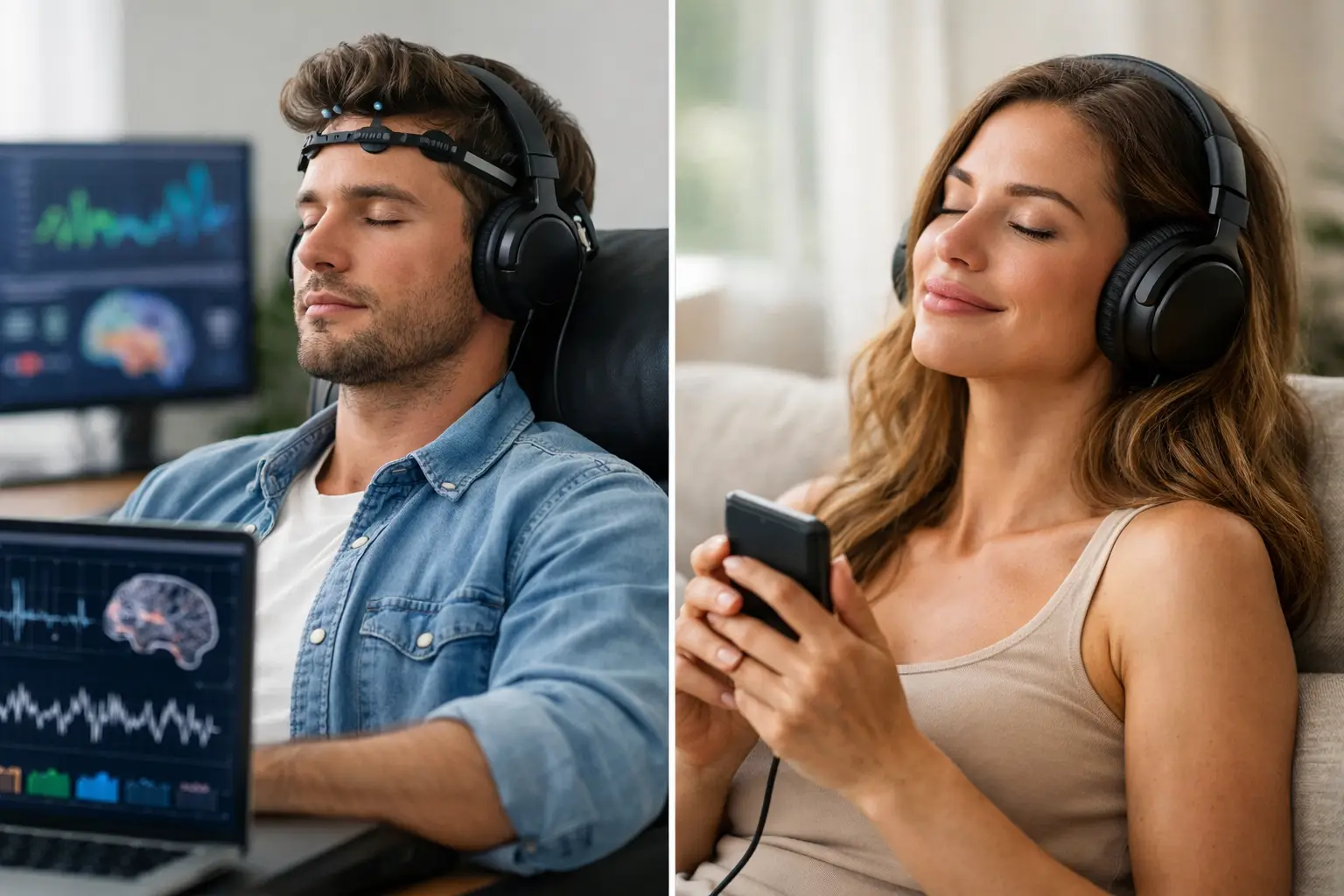
Neurofeedback is a form of brain training. Sensors placed on the scalp measure EEG activity in real time. A computer translates selected patterns into feedback, often through sound, video, or a game-like display. When your brain produces the target pattern, the feedback responds positively. Over repeated sessions, the theory is that your brain learns to spend more time in that pattern.
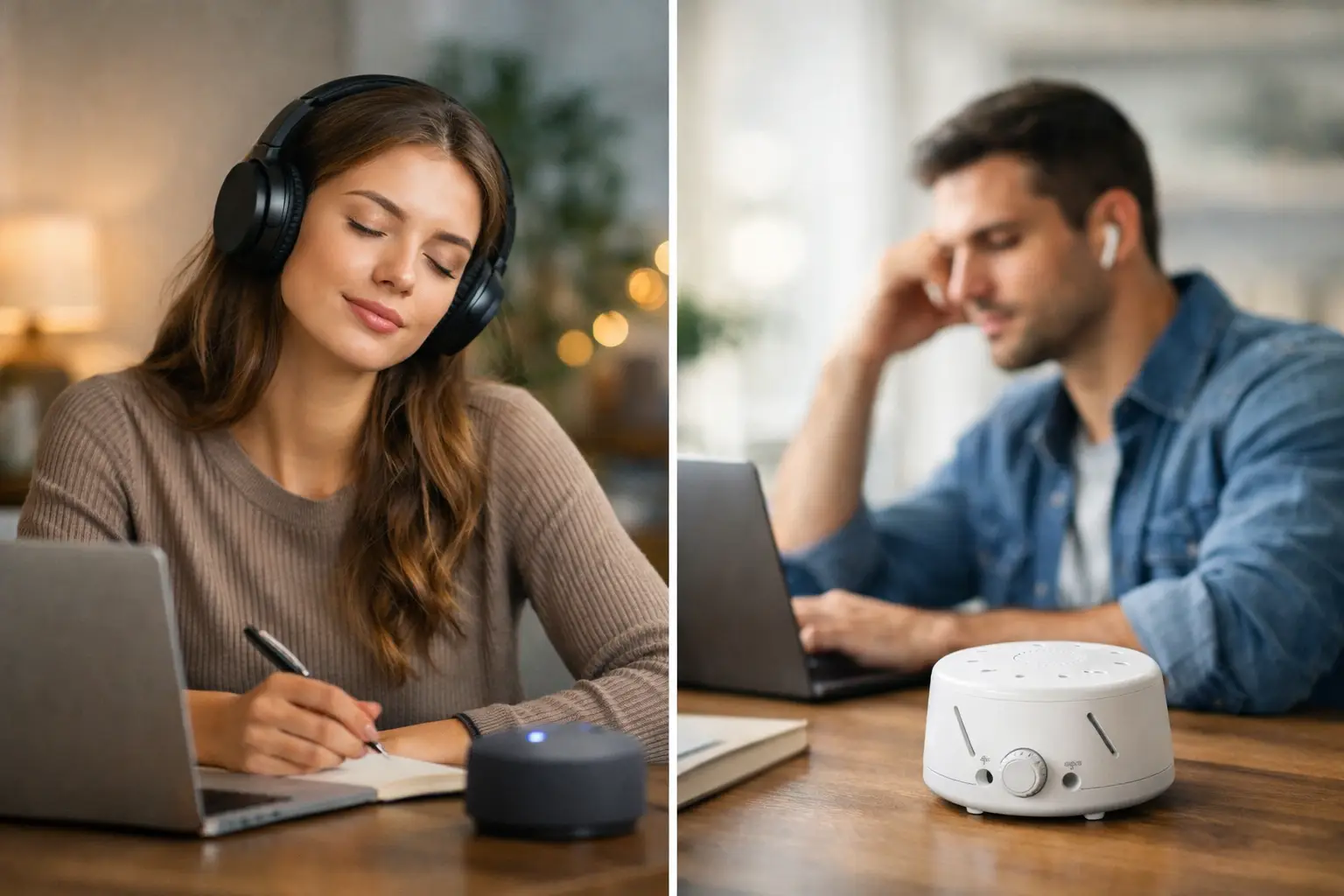
Audio entrainment does not read your brain activity. Instead, it presents rhythmic auditory cues, such as binaural beats, isochronic tones, or music layered with pulsing frequencies. The aim is to encourage the brain toward a rhythm associated with a particular state, such as relaxed alertness or focused attention. You listen. There are no electrodes, performance scores, or real-time adjustments.
That difference is meaningful. Neurofeedback is closed-loop: the system responds to your individual EEG. Audio entrainment is open-loop: the protocol delivers the same intended signal without confirming how your brain responds in that moment.
Neurofeedback: personalized, involved, and potentially expensive
For someone dealing with a specific concern under professional care, neurofeedback can be appealing because it is individualized. A qualified provider may begin with an assessment, decide which patterns to train, then alter the protocol as sessions progress. The process creates a clear sense of participation and measurement that many high-achievers appreciate.
It also comes with practical trade-offs. Sessions often require appointments, repeated visits, and a meaningful financial commitment. Home systems exist, but they still involve sensors, software, setup, and learning how to use the data responsibly. Results can vary based on the protocol, provider skill, the condition being addressed, and the consistency of training.
The research picture is also more nuanced than bold marketing claims suggest. Neurofeedback has been studied across attention, anxiety, sleep, and performance-related applications, but study quality and outcomes vary. It should not be viewed as a guaranteed treatment or a replacement for medical or mental health care. If you have a diagnosed neurological or psychiatric condition, discuss options with a licensed clinician who understands your history.
For the right person, the effort may be worth it. If you value individualized monitoring, have a targeted issue to explore, and can commit to a structured program, neurofeedback offers a higher-touch path.
Audio entrainment: low-friction support for daily mental states
Audio entrainment is built for a different reality: the professional with a full calendar, the founder switching between decisions, or the creative who needs a reliable transition into deep work. Rather than adding another appointment, it gives you a repeatable cue to put on headphones, reduce outside noise, and signal that it is time to focus or reset.
Its biggest advantage is simplicity. A short session can fit before a demanding task, during an afternoon slump, or as part of a wind-down routine. That low barrier matters. The best mental-performance practice is often the one you can repeat when work is busy and motivation is low.
The science behind entrainment is promising but should be approached with reasonable expectations. Auditory rhythms can influence attention, relaxation, and perceived mental state for some listeners, especially when used in a supportive environment. But individual response differs. Your sleep, stress load, hearing setup, caffeine intake, and the task in front of you can all affect the experience.
Audio is not mind control, and it is not a shortcut around fundamentals. It works best as a condition-setting tool alongside sleep, hydration, movement, meaningful breaks, and a work environment that protects attention. Think of it as a focused mental runway, not a replacement for the plane.
Neurofeedback vs audio entrainment: what each is best for
The most useful comparison is not which method is universally superior. It is which one fits the problem you are trying to solve.
Neurofeedback may be a stronger fit when you want personalized EEG-based training, are working with a knowledgeable provider, and are prepared for a multi-session process. Its central value is specificity. The protocol can respond to measured patterns rather than relying on a generalized experience.
Audio entrainment may be the better fit when your main need is consistent access to calm focus, a smoother shift into work, or a simple way to recover from mental overload. Its central value is accessibility. You can make it part of your day without scheduling, sensors, or a complicated learning curve.
There is also room for both. Some people use clinician-guided neurofeedback as part of a broader care plan and use audio entrainment at home to create more intentional focus routines. They serve different functions, so they do not have to be treated as rivals.
What results should you realistically expect?
A realistic goal is not to feel transformed after one session. It is to notice a more dependable transition: less resistance before starting, fewer scattered thoughts in the first stretch of work, or a clearer sense of calm after a mentally demanding day. Those shifts can compound when the practice becomes consistent.
With neurofeedback, progress is usually evaluated over a series of sessions and may include practitioner observations, symptom tracking, or standardized measures. With audio entrainment, your feedback is more practical: Did you begin the task faster? Did you stay with it longer? Did you feel less depleted afterward?
Track one or two signals for two weeks rather than chasing a dramatic sensation. For example, note how long it takes to settle into your first important task and rate your afternoon mental energy from one to ten. Simple data can reveal whether a tool is genuinely supporting your performance or merely adding another tab to your routine.
How to choose without overthinking it
Start with the level of support you need. If brain fog, poor focus, or anxiety is new, severe, worsening, or affecting daily functioning, seek professional guidance first. Sudden cognitive changes deserve medical attention, not a self-experiment.
If your challenge is the familiar pressure of modern knowledge work – too many inputs, too little mental space, and difficulty getting into a productive rhythm – start with the lower-friction option. Give an audio practice enough repetition to evaluate it fairly. Use good headphones if the protocol calls for them, choose a consistent time, and pair the session with one clearly defined task.
The FlowWave Audio is designed around that practical use case: a 15-minute daily listening ritual for people who want to move from mental noise toward focused, sustainable flow without pills or an elaborate routine. Its Alpha-to-Gamma sequence is meant to support a deliberate transition into clearer, more engaged work. Get your copy of The Flowwave Audio here: https://flowwave-neuroflowlabs.lovable.app
Do not confuse complexity with effectiveness. A sophisticated EEG system may be valuable when personalization is necessary. But when your real obstacle is that you cannot reliably create a quiet, focused starting point, a simple practice you will actually use can be the more intelligent investment.
Your brain does not need more pressure to perform. It needs a repeatable cue that tells it when to settle, attend, and begin. Choose the method that fits your life well enough to become a ritual, then let consistency do the quiet work.