If your workday keeps getting eaten alive by notifications, task-switching, and that heavy afternoon brain fog, a deep focus audio review is probably not casual reading for you. It is research. You want something that helps you lock in faster, stay mentally clear longer, and stop spending half your day trying to get your brain to cooperate.
That is the right standard to bring to this category. Most focus audio promises a lot, but the real question is simple: does it actually help you think better, or does it just give you something pleasant to hear while you stay distracted in a different mood?
What a deep focus audio review should actually measure
A useful review should not obsess over whether the sound is relaxing or cinematic. Deep focus audio is not primarily entertainment. It is a tool. The better question is whether it changes your working state in a noticeable, repeatable way.
For most high-performers, that means looking at four things: how quickly the audio helps you settle into concentration, whether it reduces mental clutter, how well it supports sustained effort, and whether you feel sharper after the session instead of merely calmer. Some tracks are excellent for stress relief but weak for cognitively demanding work. Others feel overly intense and become distracting themselves.
That trade-off matters. If you are writing, problem-solving, studying, or making decisions, the ideal audio should support attention without pulling attention toward itself.
The problem with most focus audio
A lot of audio marketed for concentration falls into one of two camps. The first is ambient background music with a productivity label on it. It can sound nice, and sometimes that is enough, but it often does very little to shift your mental state in a reliable way.
The second camp leans heavily on technical claims without a clear user experience. You see references to frequencies, entrainment, or neuroscience, but the listening experience feels harsh, generic, or oddly fatiguing. When that happens, the science may sound impressive on paper, but the product still fails the test that matters most: do you want to use it daily, and does your brain feel better when you do?
This is where a more refined approach stands out. Premium deep focus audio should feel intentional. It should respect that your nervous system needs enough calm to stop spinning, but enough stimulation to remain alert and precise.
Deep focus audio review: what separates the best from the rest
The strongest products in this category tend to share a few traits. First, they are built for consistency, not novelty. You are not looking for a dramatic one-time experience. You are looking for something you can return to when you need your best thinking.
Second, the session length matters more than many people expect. Long tracks can be useful, but they also create friction. If a system asks too much of your time, you will not use it enough to learn whether it truly helps. A shorter, targeted session often wins because it fits real life. Fifteen minutes before a work block is realistic. An hour-long ritual is usually not.
Third, the audio should help you move toward flow instead of simply making you sleepy. That distinction is huge. Deep focus is not sedation. It is relaxed intensity. You feel less scattered, but more capable.
Where The FlowWave Audio fits in
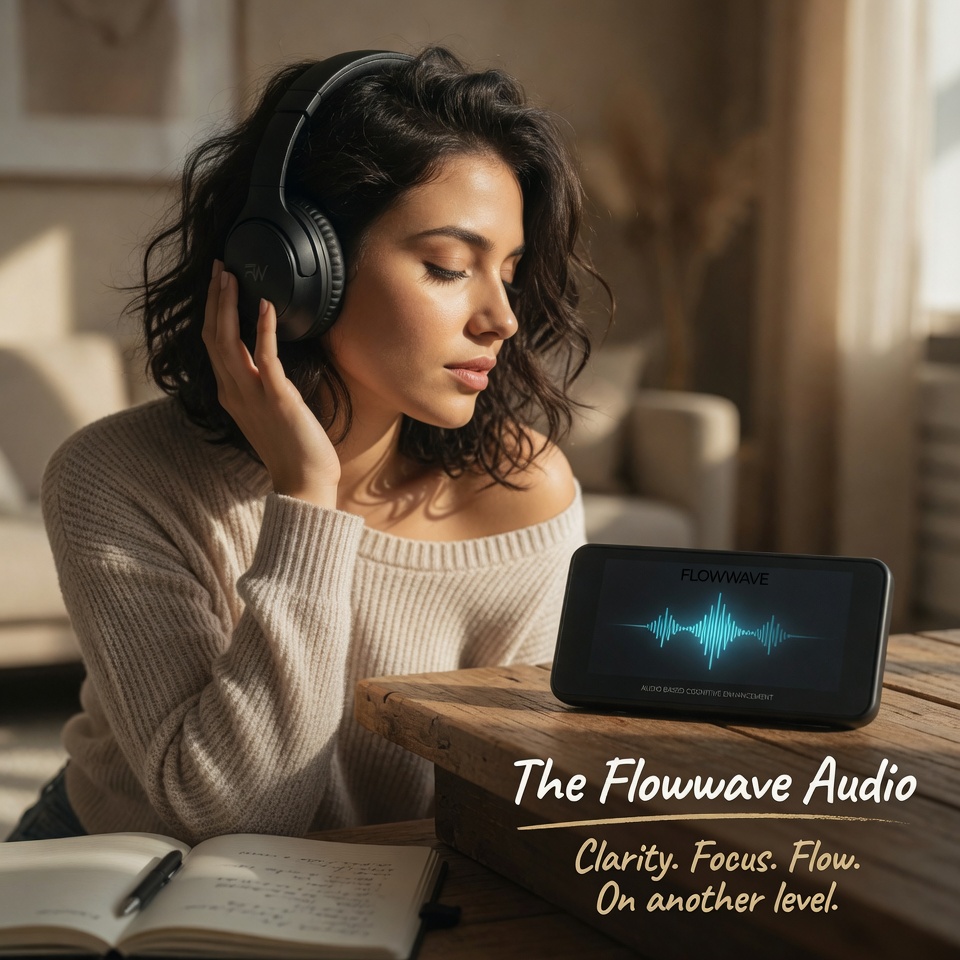
The FlowWave Audio stands out because it is designed around that exact tension: calming mental noise while supporting higher cognitive performance. Instead of functioning like generic meditation music, it uses a precise sequence of Alpha to Gamma 40 Hz brainwave frequencies combined with 432 Hz tones in a short 15-minute format.
That design choice matters for busy professionals. You are not being asked to overhaul your routine, stack supplements, or carve out a huge block of time. You press play, give your brain a structured reset, and transition into focused work with less resistance.
For readers who want a direct option to explore, The FlowWave Audio “Unlock Your Deep Flow” at https://flowwave-neuroflowlabs.lovable.app is the clearest example of a performance-oriented product in this space.
What the experience is likely to feel like
A good deep focus audio experience usually does not hit like caffeine. It is subtler than that. What many users notice first is reduced internal friction. The noisy, restless quality of the mind eases off. Starting feels easier. You stop negotiating with yourself about whether you are ready.
From there, the benefits depend on context. If you are already exhausted, audio may help you regain some clarity, but it will not replace sleep. If you are overstimulated and scattered, it can be especially useful because it gives your attention a cleaner channel. If you are already fairly focused, the effect may feel more like refinement than rescue.
That is an important point in any honest deep focus audio review. Results are real, but they are not magical. Audio can support a better state. It cannot do your work for you.
Who gets the most value from deep focus audio
This category tends to work best for people whose output depends on sustained cognition. That includes executives making high-stakes decisions, founders juggling competing priorities, writers trying to hold a thread of thought, and knowledge workers who need long stretches of clean concentration.
It can also help people who feel that their mental performance has become less reliable with age or stress. Maybe you can still do the work, but it takes longer to get into gear. Maybe your afternoons feel mentally expensive. Maybe your focus is intact in theory, but fragile in practice. That is where a structured listening protocol can become more than a wellness habit. It becomes a practical support tool.
Students and creatives can benefit too, though the ideal track for analytical work may differ slightly from what feels best for brainstorming. Again, it depends on the kind of focus you need.
What to be cautious about
Not every product labeled as brain optimization deserves your trust. Some overpromise dramatic cognitive transformation with little attention to daily usability. Others make broad scientific claims without helping the user understand what the listening session is for.
There is also a personal preference factor. Some people respond better to more minimal sound design. Others prefer a richer sonic environment. If the audio irritates you, even slightly, that friction can undermine the whole point.
Volume matters too. Louder is not better. The goal is not sensory intensity. It is state change. Headphones may improve the experience for some users, but they are not always essential. Testing the audio during a real workweek tells you more than judging it in a single casual listen.
How to evaluate a deep focus audio review for yourself
The smartest way to test any focus audio is to stop asking whether it sounds impressive and start asking whether it improves output. Use it before a demanding task for several days in a row. Pay attention to start time, distractibility, energy stability, and the quality of your thinking.
Do you get into meaningful work faster? Do you stay with the task longer? Do you feel less mentally taxed afterward? Those are stronger indicators than whether the track feels novel or relaxing.
This also helps you avoid a common mistake: confusing enjoyment with effectiveness. Some of the most pleasant audio is not the most useful for deep work. Some of the most effective audio is almost invisible once you are in the zone, which is exactly what you want.
Is it worth it?
If you are expecting focus audio to erase stress, replace sleep, and turn every work session into peak performance, no. That expectation is too high. But if you want a simple, low-effort way to reduce mental friction and increase the odds of entering a clear, productive state, the right audio can absolutely be worth it.
That is especially true for people who have already tried the usual fixes. More coffee. More tabs on productivity systems. More pressure. More self-criticism. None of those reliably restore a tired, distracted brain.
What often works better is a repeatable cue that tells your nervous system it is time to settle, organize, and focus. That is the promise of quality deep focus audio at its best. Not hype. Not a dramatic ritual. Just a cleaner path into the kind of mind you do your best work with.
If your attention has felt expensive lately, that alone is a reason to take this category seriously. Sometimes the smartest performance upgrade is not adding more effort. It is giving your brain a better starting point. And when a 15-minute listening practice helps you think with more clarity, calm, and momentum, the value is not just in the audio. It is in how much of yourself you get back.