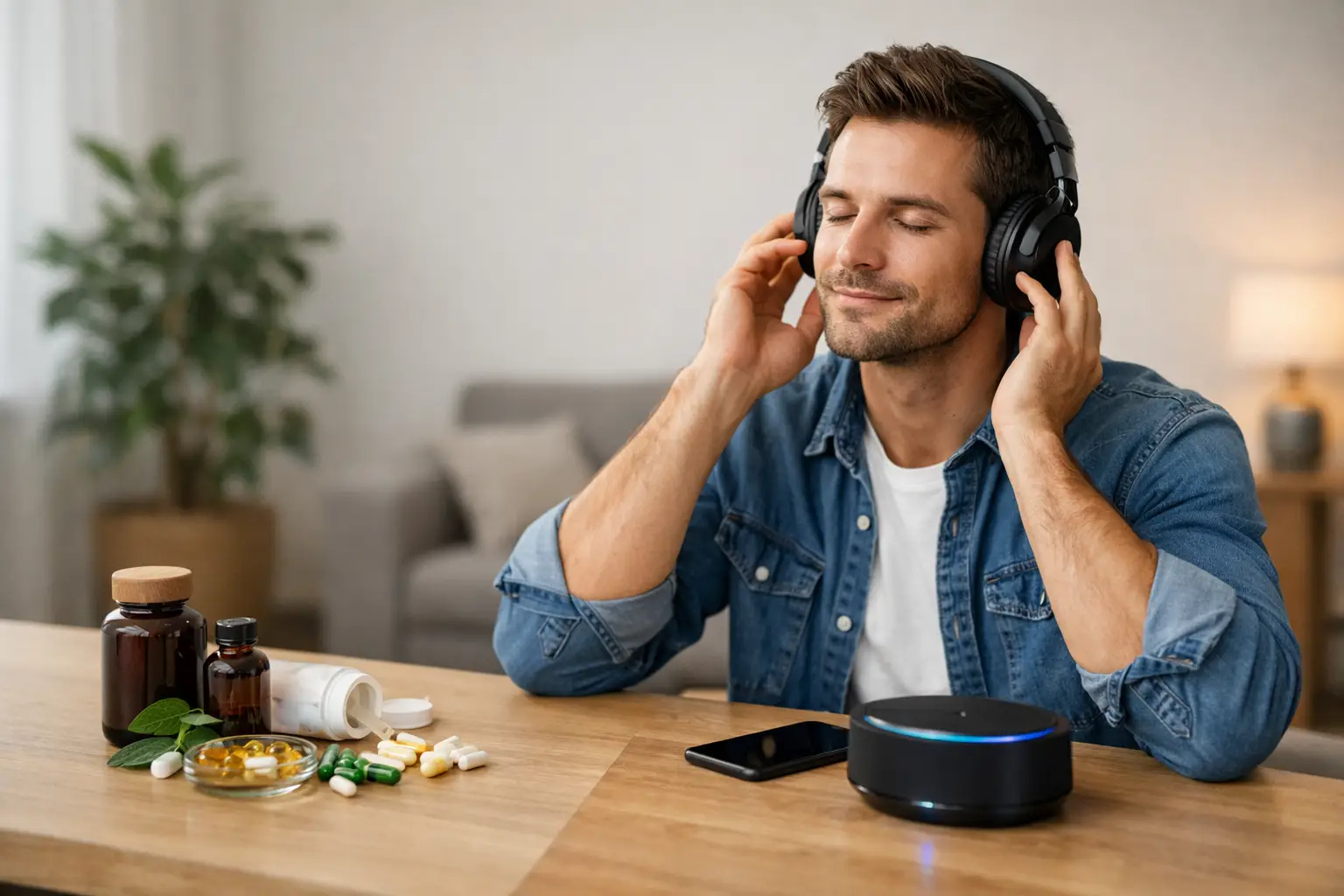
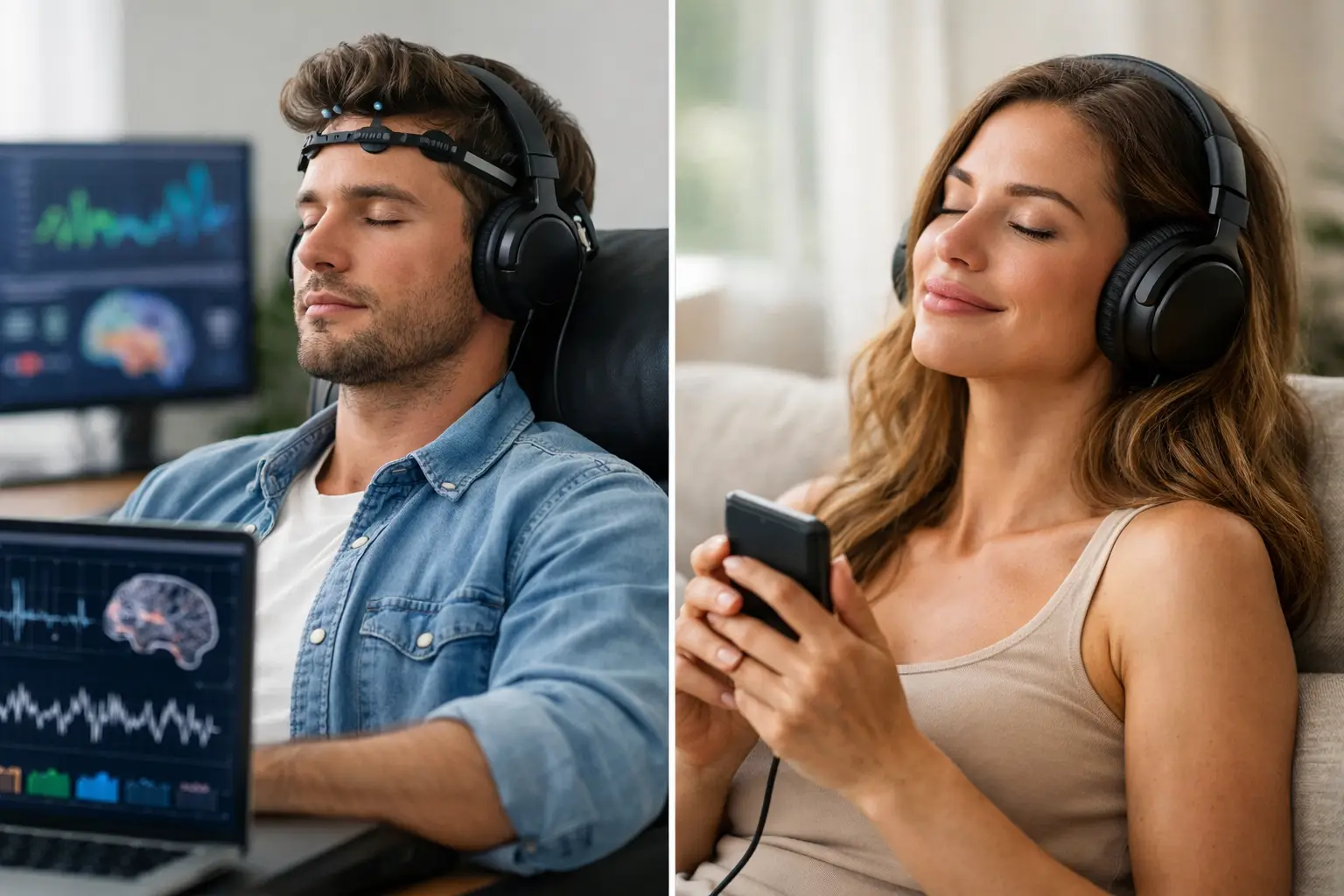
That 2:30 p.m. feeling is familiar to almost every ambitious professional: the calendar is full, the work matters, but your mind starts skipping from task to task. Coffee may make you more alert without making you more focused. Another productivity app can add one more system to manage. This focus enhancement audio review looks at a simpler option – using carefully designed sound to create a calmer runway into concentrated work.
The short version is that focus audio can be useful, especially when it becomes a consistent pre-work cue rather than a miracle fix. The right track may help reduce the mental noise that makes it hard to begin, settle your attention before demanding work, and make a deep-work block feel more intentional. But results depend on the listener, the audio design, the environment, and whether you pair it with work habits that protect your attention.
What Focus Enhancement Audio Is Actually Trying to Do
Focus enhancement audio is not the same as a generic playlist, ambient coffee-shop noise, or a meditation session designed mainly for relaxation. It is usually built around brainwave entrainment, a method that uses rhythmic sound patterns to encourage the brain toward a particular state of activity.
Some programs use binaural beats, which present slightly different tones to each ear through headphones. Others use rhythmic pulses, layered frequencies, soundscapes, or a combination of these approaches. The goal is not to force your brain into a state against its will. It is to give your nervous system a steady, low-effort cue that can support the transition from scattered attention to quieter, more sustained concentration.
For knowledge work, the timing of that transition matters. The first 10 minutes of a proposal, presentation, strategy document, or difficult creative task are often where resistance is highest. Your brain is still carrying the residue of messages, meetings, decisions, and unfinished tasks. A focused listening ritual can help create separation between that noise and the work in front of you.
Focus Enhancement Audio Review: What the Evidence Supports
The science is promising, but it deserves a measured reading. Research into auditory entrainment and binaural beats has found potential benefits for attention, relaxation, mood, and certain cognitive tasks. At the same time, studies vary widely in the tones used, session length, listener expectations, and ways researchers measure outcomes. That makes broad promises about instant intelligence or guaranteed memory gains hard to defend.
A more realistic expectation is this: audio may help you arrive at a focused state more reliably. That is valuable. High-quality work is often less about finding a dramatic surge of motivation and more about lowering the friction between intention and action.
There is also a behavioral effect that should not be dismissed. If you use the same short audio session before focused work, your brain can begin to associate that sound with a protected period of concentration. Over time, the ritual itself can become a powerful cue. It is similar to sitting in the same chair to write or taking the same walk before planning – except it takes less setup and travels easily.
That does not mean every listener will notice the same effect. People who are highly sensitive to sound may find certain tones distracting. Others may respond better to neutral ambient audio than pulsing frequencies. And if chronic sleep debt, anxiety, burnout, or an overloaded workload is driving your brain fog, audio can support you, but it cannot replace rest, professional care, or better boundaries.
What a Strong Focus Track Should Feel Like
The best focus audio does not demand your attention. It stays in the background while giving your mind less to latch onto. Lyrics are often counterproductive for reading, writing, analysis, and other language-heavy work because your brain starts processing the words. Sudden changes in volume, overly dramatic music, or harsh high frequencies can create the same problem.
A well-designed track should feel steady, comfortable, and purposeful. You may notice that your breathing settles, the urge to check your phone loses some force, or starting the task feels less emotionally heavy. The effect can be subtle. That is not a weakness. Deep work rarely begins with fireworks. More often, it begins when the internal chatter drops just enough for you to stay with one problem.
The FlowWave Audio is designed around that practical need: a 15-minute daily protocol that moves through Alpha toward Gamma 40 Hz frequencies with 432 Hz tones. Its appeal is the low-friction format. Rather than asking you to commit to a long meditation practice, take another supplement, or build a complicated morning routine, it gives you a defined listening window before a focus block. Get The Flowwave Audio here: https://flowwave-neuroflowlabs.lovable.app
Its strongest fit is for people whose challenge is mental switching cost – the executive moving from calls to strategic thinking, the entrepreneur carrying six open decisions, the creative facing a blank page, or the student trying to make study time actually count. If you want total silence, or you do your best work with familiar instrumental music, this format may not be your first choice. Personal preference still matters.
How to Test It Without Fooling Yourself
Expectations can influence any wellness tool. The cleanest way to evaluate focus audio is to test it in a repeatable way rather than judging it by one unusually good or bad afternoon.
Use the same track for five to seven work sessions. Listen at roughly the same time of day, ideally before a task that requires sustained concentration. Keep your phone out of reach, decide the one outcome you want from the session, and start work immediately after the audio ends. Then note three things: how long it took to begin, how often you switched tasks, and how mentally drained you felt afterward.
This matters because “I felt focused” is vague. A better signal is finishing the section you had avoided, reviewing fewer emails during a writing block, or staying present in a complex spreadsheet for 45 minutes without chasing distractions. If the audio helps you create those outcomes more consistently, it is earning its place in your routine.
Headphones are usually worth using when a program relies on binaural elements. Keep the volume at a comfortable level. Louder is not better, and listening should never create pressure, ringing, or irritation. Avoid using any focus audio while driving, cycling in traffic, operating machinery, or doing anything that requires full awareness of your surroundings.
Where Audio Fits in a Real Focus Strategy
Think of focus audio as an entry ritual, not a substitute for a work system. It works best alongside a clear task, a realistic time block, and fewer interruptions. If your inbox and chat alerts remain open, no frequency can make distraction-free concentration effortless.
For many people, a useful pattern is 15 minutes of listening followed by 45 to 90 minutes of protected work. The audio marks the transition. The work block is where the value compounds. On especially difficult days, use it before planning rather than forcing yourself straight into output. A calmer plan can prevent three hours of reactive effort.
It also helps to distinguish focus from energy. You may need a walk, water, food, daylight, or sleep more than another mental performance tool. Audio can be a thoughtful part of brain health and productivity, but it should not become a reason to ignore a body that has been running on empty.
The Bottom Line for Busy, Mentally Tired People
Focus enhancement audio is most compelling when you are tired of relying on willpower to get started. It offers a brief, repeatable pause between the noise of the day and the work you want to do well. The benefits are likely to be gradual and practical rather than dramatic: less resistance, a calmer mind, and more sessions where your attention stays where you put it.
Give it enough consistency to judge fairly, then let the results decide. If 15 quiet minutes helps you return to your work with more clarity and less friction, that small ritual can become one of the most useful parts of your day.