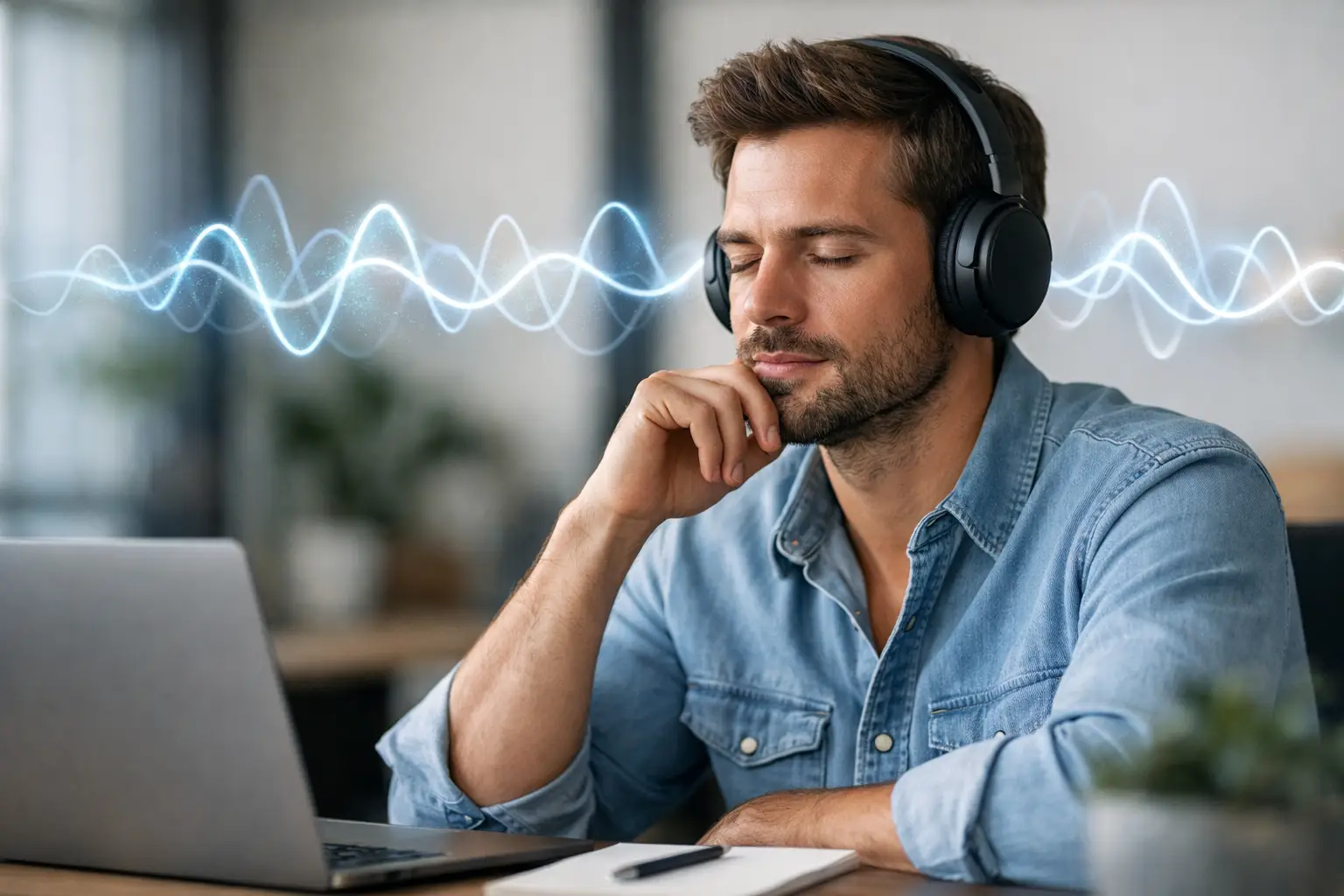
Some days, focus does not disappear all at once. It leaks out in small ways. You reread the same email three times, switch tabs without thinking, forget what you opened your notes to do, and by mid-afternoon your brain feels noisy instead of sharp. If you have been wondering, can brainwave audio improve concentration, the honest answer is yes for some people, under the right conditions – but it is not magic, and it works best when you understand what it is actually doing.
Brainwave audio sits in that interesting space between wellness and performance. It is not a stimulant. It is not a productivity hack in the usual sense. The goal is simpler and, for many people, more sustainable: help the brain settle into a state that supports attention, mental clarity, and calmer effort.
Can brainwave audio improve concentration in real life?
In practical terms, brainwave audio is designed to influence your mental state through sound. Different audio methods, including binaural beats and isochronic tones, are built around rhythmic patterns that may encourage the brain to sync with certain frequencies. That process is often called entrainment.
The idea is straightforward. Your brain does not operate at one speed all day. Different brainwave ranges are associated with different states, such as relaxed wakefulness, focused attention, and higher-level cognitive processing. When audio is engineered around those patterns, it may help nudge the brain toward a more useful state for the task in front of you.
That does not mean every track called “focus music” will suddenly turn distraction into deep work. A lot depends on the quality of the audio, your nervous system, your listening environment, and whether you are using it to support concentration or expecting it to replace sleep, stress management, and basic work habits.
For high-performing adults dealing with mental fatigue, that distinction matters. If your attention is fragmented because your brain is overstimulated, exhausted, or constantly switching gears, the right audio may help create enough internal stability to focus longer and with less friction. If you are severely sleep-deprived, overwhelmed, or trying to do cognitively heavy work in a chaotic environment, audio alone will have limits.
What the science suggests
The research on brainwave entrainment is promising, but it is not absolute. Some studies suggest certain forms of rhythmic auditory stimulation can support attention, working memory, relaxation, or reduced anxiety. Other findings are mixed. That is normal in a field that involves individual brain differences, varying protocols, and inconsistent audio quality across studies.
Still, there is a reason serious people keep paying attention to this category. Mental performance is not only about effort. It is also about state regulation. When your brain is too tense, too scattered, or too fatigued, concentration becomes expensive. A well-designed audio protocol may lower that cost by helping you transition into a calmer, more attentive mode.
This is one reason people often report that brainwave audio feels different from background music. Music can help with mood and motivation, but it can also pull attention outward, especially if it is lyrical, emotionally charged, or unpredictable. Brainwave-focused audio is usually built with another purpose in mind: reduce internal noise and support sustained cognitive engagement.
Why some people feel a clear shift and others do not
The biggest variable is not intelligence. It is responsiveness.
Some listeners notice a difference within a few sessions. Their mind feels quieter, their attention steadier, and the usual resistance to starting deep work softens. Others need a week or two of consistent use before the effect becomes obvious. And some people barely notice anything at all.
That does not automatically mean the audio failed. It may mean the timing is wrong, the protocol is not matched to the task, or the brain is too dysregulated to respond quickly. Someone trying to use a relaxing alpha-heavy track for analytical work may feel calm but not especially productive. Someone else using a more activating frequency progression before a writing block might feel locked in within minutes.
This is where quality matters more than marketing language. Generic audio often blends ambient sounds with vague claims about focus. Premium protocols are more intentional. They are designed around how attention actually shifts, often moving the listener through frequencies in a deliberate sequence instead of holding one static tone the whole time.
How brainwave audio may support deeper focus
Concentration is not just about trying harder. It depends on a few conditions happening at once: reduced mental chatter, enough arousal to stay alert, and enough calm to avoid stress-based distraction.
Brainwave audio may help by supporting that balance.
Alpha frequencies are commonly associated with relaxed alertness. This can be useful when your mind is busy, overstimulated, or tense. It is the mental equivalent of unclenching your grip so attention can stabilize.
Beta is often linked with active thinking and task engagement, though too much high beta can feel edgy for some people. Gamma, particularly around 40 Hz in some protocols, has drawn interest for its association with higher-order processing, attention, and cognitive integration.
That is why some advanced focus audio does not stay in one zone. It may begin by calming the brain enough to reduce internal static, then gradually guide the listener into a more energized state for sustained work. For ambitious professionals who need performance without feeling wired, that progression can make a real difference.
Can brainwave audio improve concentration better than music or silence?
It depends on what breaks your focus in the first place.
If silence makes your mind wander, structured audio may give your brain just enough guidance to settle. If music helps you start but eventually becomes another stimulus to manage, brainwave audio may feel cleaner and less mentally demanding. If you already work well in silence and have no trouble sustaining attention, the benefits may be smaller.
The real advantage for many adults is not that brainwave audio creates superhuman focus. It is that it can shorten the gap between sitting down to work and actually getting into flow. That matters when your day is crowded, your mental energy is limited, and you cannot afford to spend 45 minutes trying to feel ready.
How to use brainwave audio for concentration
The best approach is simple. Use it before or during a single clear work block. Do not multitask your setup. Choose one cognitively meaningful task, put your phone away, and give the audio your full commitment for at least 15 minutes.
Consistency matters more than intensity. Many people make the mistake of trying brainwave audio once while distracted, stressed, and half-checking messages, then deciding it does not work. Your brain needs a fair test. A short daily practice often works better than occasional marathon sessions.
Headphones may be important for some formats, especially binaural beats. The listening environment also matters. If your workspace is full of interruptions, the audio is doing extra labor before it can even support concentration.
And pay attention to timing. Some people respond best first thing in the morning, when they want to start clean and focused. Others get the biggest benefit in the afternoon, when mental fatigue usually starts to flatten performance.
For readers who want a low-effort, performance-oriented option, The FlowWave Audio https://flowwave-neuroflowlabs.lovable.app was built for exactly this problem. It uses a precise 15-minute sequence that moves through Alpha to Gamma 40 Hz brainwave frequencies with 432 Hz tones to help restore sharp focus, reduce mental fatigue, and make deep work feel more accessible. For people who do not want another complicated routine, that simplicity is part of the value.
What brainwave audio will not do
It will not fix chronic sleep loss. It will not erase burnout. It will not make every task interesting.
That is not a weakness. It is just the reality of any tool designed to support the brain rather than overpower it. The strongest use case for brainwave audio is when you already care about your cognitive performance and want a cleaner way to regulate your mental state without depending on more caffeine, more force, or longer recovery time after every workday.
Used well, it can become a reliable cue. You put it on, your nervous system gets the message, and focus becomes easier to access. Not effortless every single time, but more consistent. More trainable. More under your control.
And for many people, that is the real shift. Concentration stops feeling like a trait you either have or do not have. It starts feeling like a state you can support on purpose.
If your mind has been feeling capable but scattered, ambitious but tired, that is worth paying attention to. Sometimes the next level of performance does not come from pushing harder. It comes from giving your brain a better signal to follow.
Leave a Reply